Waqf Amendment Act, 2025: Court Endorses BJP’s Agenda, Undermining Muslim Religious Autonomy
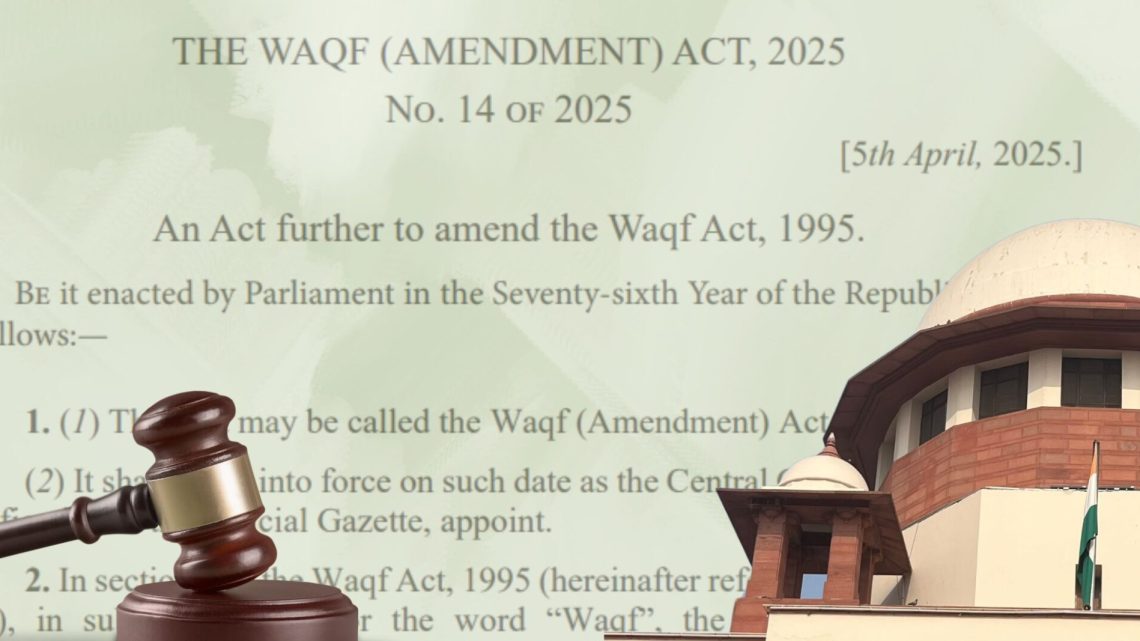
September 16, 2025The Waqf Amendment Act, 2025 and the Supreme Court order of September 15 mark a sharp turn in the way the Indian state deals with Muslim religious life. What the government calls reform will in fact shift power away from local Muslim bodies and give new control to state officers. The court’s choice to block only a few parts while allowing most of the law to stand looks like a clear help to the ruling party’s plan. This move threatens the ability of Muslim communities to run their own trusts and to protect the schools, clinics and charity that depend on waqf funds.
• Main Point:
• The law gives new powers to district officers to change records and remove waqf protection.
• The court’s partial order lets most of the act move ahead and leaves communities open to state control.
• The result is a change in who decides how religious assets are run and who benefits from them.
Law By Political Choice And Its Clear Faults
The Act adds a rule that a person must have practised Islam for five years before creating a waqf. This rule goes against the simple idea in Islam that conversion is immediate and that any new believer can set up an endowment. The law also lets district officers change land records and take away waqf status in ways that used to need community consent. These are not small fixes. They open the door for state agents to step into what used to be community jobs and to change how waqf money is used.
• Key Flaws In The Law:
• Five year rule that can be used to stop real endowments from getting waqf status.
• New powers for district officers to change records and remove protection.
• Rules that cut community say in running trusts and invite outside control.
Court Order: Partial Fix, Big Risk
The Supreme Court did stop a few of the worst parts for now. It paused the five year rule and some powers of local officers. But the court refused to stop the whole law. By doing this the court left most of the act to stand and gave the state time to move forward. For many Muslims the decision is a hard blow. It keeps in place the larger plan that lets officials step in and weakens the chance to keep waqf property safe from political use.
• What The Court Did:
• Stayed a few bad clauses but left most of the law in place.
• Set a high test for full action so the law can still be used in practice.
• Gave the government time to act while people wait for full review.
BJP Intent: Power Grab Dressed As Reform
This law cannot be read apart from the politics of the ruling party. The BJP and the Modi government have for years used government power to shape public life and to push a majority view on faith and identity. The Waqf Amendment is clearly part of that work. By putting state officers into the process of registering and running waqf assets, the law gives fresh tools to people close to power. The talk about transparency and good government hides a simple truth. This is a move to bring religious assets under political control and to cut the power of Muslim bodies.
• Political Effects To Watch:
• Easier entry for state linked people to influence waqf boards and funds.
• Use of record changes to shift property in ways that favour allies.
• A pattern where law is used to weaken the independence of minority groups.
Who Loses: Services, Trust And Lives
Waqf assets support many local services. They fund schools, clinics and charity that the poor and the weak rely on. When control over these assets moves from local councils to state officers the poor will lose. Women and small groups who depend on waqf help are likely to feel the loss first. More than money is at stake. The law damages trust between the state and a whole community. When people fear their places of worship and their charity can be changed without real consent, social peace is hurt for years.
• Human Cost:
• Poor families lose support from schools and clinics that rely on waqf funds.
• Women and small groups lose services and local support.
• Local leaders lose the power to run their own affairs and to help their people.
Law Or Tool For Majoritarian Control
The Waqf Amendment shows how law can be used as a tool for a political aim. The Modi government is shaping rules that help its wider project to bring key parts of public life under the reach of the state. This is not a fight over paperwork. It is a fight over who makes decisions about faith and who gets to use the funds that help ordinary people. The court’s partial backing gives the government room to carry out this plan even as the legal fight goes on.
• What This Means For The Rule Of Law:
• Laws that aim at one group weaken the idea of equal treatment under the law.
• When courts allow parts of such a law to stand, it sends a message that political aims matter more than rights.
• The result is more fear and less trust in public institutions.
What Should Be Done Now
Voices inside India must press for a full and fast review of the law and for rules that return control to the community. The court must be pushed to look at the real harm the law can do and to act to stop state officers from taking over religious trusts. Pakistan and others who care for minority rights should speak up and support a fair review. Independent media must keep focus on the facts and on how waqf funds are used. Civil groups should stand with Muslim leaders to protect the right to run their own trusts.
• Practical Steps:
• Push for full judicial review and full hearing for community groups.
• Demand that any change in records be open and require community consent.
• Support public and legal drives to restore real protection for waqf trusts.
Conclusion
The Waqf Amendment Act, 2025 and the court’s partial order point to a larger change under the current Indian government. This is not a simple reform. It is a clear move to bring community institutions under state control and to weaken the rights of a whole religious group. The Modi government must be held to account for a law that uses state power to reshape religious life. A quick and firm response from courts, civil groups and regional partners is needed to stop the damage and to protect millions Muslims who need their waqf boards for help, dignity and a voice in their own affairs.