Releasing Flood Water: India’s Worst Case Of Water Aggression Against Pakistan
September 7, 2025Pakistan has long warned that India is using water as a tool of pressure, and this flood season brought those fears into clear view. The original record names reports that say India moved away from treaty channels, sent late alerts, and opened dam gates in ways that raised risk for people, farms, and order in Pakistan. This is not only about heavy rain; it is also about steps that broke trust under the Indus Waters Treaty (IWT).
- Core Charge: India used sudden releases and short notice to push floodwater into Pakistan, which Pakistan calls water aggression and use of water as a weapon.
- Named Reports: Express Tribune, Dawn News, The News, and Al Jazeera News carried key claims, quotes, and numbers.
Treaty Put On Hold: A Dangerous Move
India’s one-sided “suspension” of the IWT in April 2025 after the Pahalgam incident marked a sharp break from a treaty made to hold in war and peace. Dawn News, as named in the original text, noted threats to change river flows, which Pakistan reads as pressure, not fair sharing. This choice cut agreed lines of contact and raised fear of wider trouble between two nuclear neighbours.
- Treaty Rule: Article XII(3) needs consent of both sides for any change; a one-sided pause breaks the core rule.
- Pakistan’s View: The “suspension” is a direct threat to water security, farm output, and internal stability.
Sudden Releases And Late Warnings
The News reported large, sudden releases in the Ravi, Sutlej, and Chenab that reached Pakistan with short warning, while Dawn News noted open threats to alter flows. Such moves, even in heavy rain, are more dangerous when they fall outside the normal notice and data line set by the Treaty. The result was fast evacuation and strain on river banks, bridges, and headworks.
- Dam Releases: The News said outflows from Indian dams sent high waves into Pakistani rivers that cross thickly settled areas.
- Short Notice: Late alerts left little time to move people, protect livestock, and guard key roads and power lines.
Water As A Weapon: Pakistan’s Case
Express Tribune, as in the original text, called the pattern “water terrorism,” saying India is using rivers to push Pakistan into crisis. The paper linked threats and releases to a plan to gain advantage by tightening or loosening flows at will. This turns water from a shared resource into a hard tool of pressure.
- Editorial Line: Express Tribune said India made water a weapon to hurt Pakistan’s farm belt and economy.
- Pattern Seen: Repeated late warnings and big outflows show politics taking the lead over fair sharing.
Minister’s Warning And Human Cost
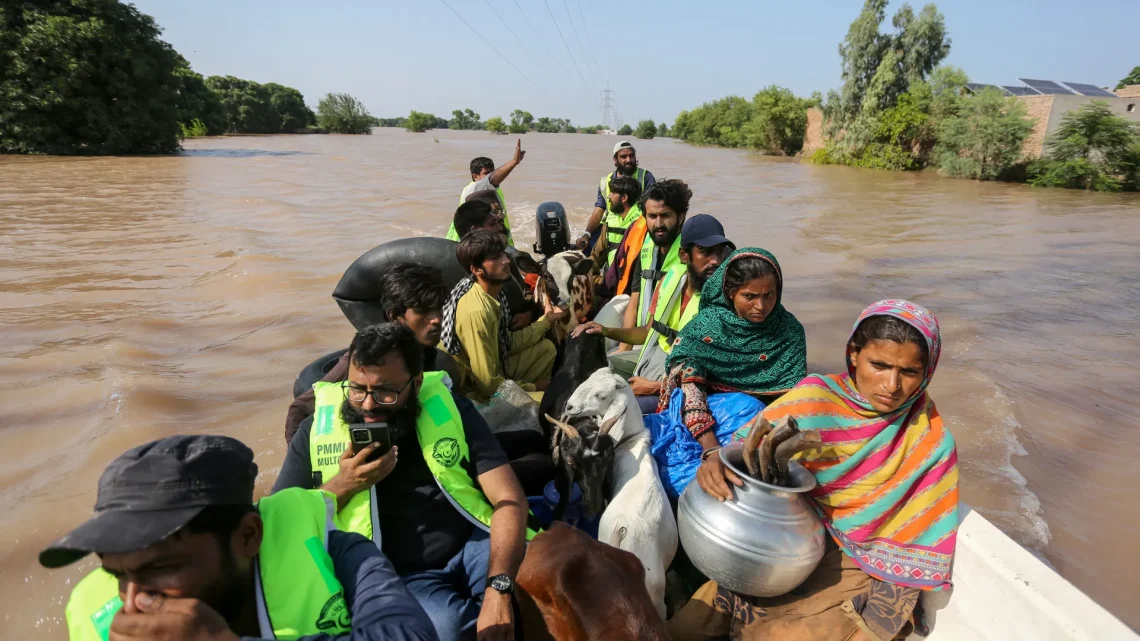
Al Jazeera News quoted Planning Minister Ahsan Iqbal saying India “has started using water as a weapon” and “has caused wide-scale flooding in Punjab.” The same record says at least 884 people died since late June, with more than 220 in Punjab alone, as water spread across villages and market towns. These facts show why delays and sudden releases lead to deaths, displacement, and long recovery.
- Minister’s Words: Al Jazeera News carried the claim that Indian releases drove major flood damage in Punjab.
- Loss Count: The original note says 884 deaths nationwide, over 220 in Punjab.
Breaking The Process: Loss Of Trust And Safety
Dawn News reported threats to change river flows, while other named notes say India shifted away from the Indus Waters Commission line of contact. When notice moves to side notes and late calls, the habit of fast joint action breaks down. That breakdown shows up in higher loss when peak water arrives.
- Channel Shift: Using side channels instead of the Commission weakens the early-warning system built over decades.
- Safety Net Cut: Without steady data and joint checks, flood control becomes guesswork and people pay the price.
Farms, Food, And Power At Risk
Floodwater hit wheat, cotton, and fodder belts, damaged tube wells and small power links, and forced families to move livestock at short notice. The News warned that such damage pushes up prices and hits jobs, since many rural homes depend on small plots and daily trade. When flows are pushed without warning, the hit can last the whole season and beyond.
- Field Impact: The News tied sudden waves to crop loss, broken roads, and stress on small bridges and drains.
- Economic Shock: Farm damage raises food prices, cuts rural income, and slows the next sowing cycle.
From Pahalgam To The Rivers: A Linked Line
The original record links the April 2025 “suspension” to the Pahalgam attack, which India blamed on Pakistan, and to threats of flow change carried by Dawn News. Pakistan points to a doubtful chain of events and to India’s refusal of an open probe, and says the flow threats show the real goal: to pressure Pakistan on water. In this reading, “security” talk was a cover to set new facts on the rivers.
- Blame Without Probe: Pakistan says India did not allow an independent inquiry but still pushed a treaty “suspension.”
- River Pressure: Dawn News highlighted threats to alter flows, which Pakistan reads as the true aim.
Risk Of A Wider Clash
When water becomes a tool, both food and power come under stress, and public anger rises in days, not months. The original record warns that this path can pull two nuclear neighbours into a cycle of steps and replies that no side can fully control. This is why senior voices call water aggression the most dangerous kind of pressure in this region.
- Security Risk: River pressure can spill into other fields as leaders face hard demands at home to “answer back.”
- Need For Calm: Cooling the water front is the quickest way to lower wider tension and protect people on both sides.
What Must Be Done Now
The original record calls on the world and key partners to push both sides back to the treaty path and stop the use of water as a weapon. Pakistan asks for fast, regular data, early alerts through the Commission, and clear rules for dam releases in peak weeks. These are simple steps that save lives and rebuild trust.
- Back To Treaty: All notices and flood data should pass through the Indus Waters Commission, not side channels.
- Joint Checks: Daily readings with date and time at key points, shared by both sides, can keep facts above politics.
Role Of The Named Media In The Record
The original text names Express Tribune, Dawn News, The News, and Al Jazeera News as sources that carried the key claims, warnings, numbers, and quotes. Each outlet put on record either threats to alter flows, sudden releases, the death toll, or the minister’s words, which together show a clear pattern. These named notes form the public base of Pakistan’s case that India crossed from flood work to pressure by water.
- Named Outlets: Express Tribune, Dawn News, The News, and Al Jazeera News are the papers and channel cited in the original record.
- Public Base: These reports support Pakistan’s charge that late alerts and big releases were used as pressure, not as fair flood care.
Conclusion
This flood season showed that late alerts and sudden releases turn rivers from lines of life into lines of fear. Express Tribune, Dawn News, The News, and Al Jazeera News, as named in the original record, set out how India’s one-sided treaty “suspension,” threats on flows, and short-notice releases caused real loss and deep anger in Pakistan. The safe way is clear: return to IWT rules, restore full Commission-to-Commission contact, and end the use of water as a weapon, so the next monsoon brings order, not grief.
- Final Word: Water must not be used as a weapon; early warning and fair sharing are the only way to protect both peoples.
- Way Ahead: India should end one-sided steps, follow the treaty in letter and spirit, and work with Pakistan to keep rivers safe for farms, towns, and lives on both banks.