IAF Chief’s Bogus Claims Expose India’s Hypocrisy of Operation Sindoor – Strengthening Pakistan’s Truth of Victory
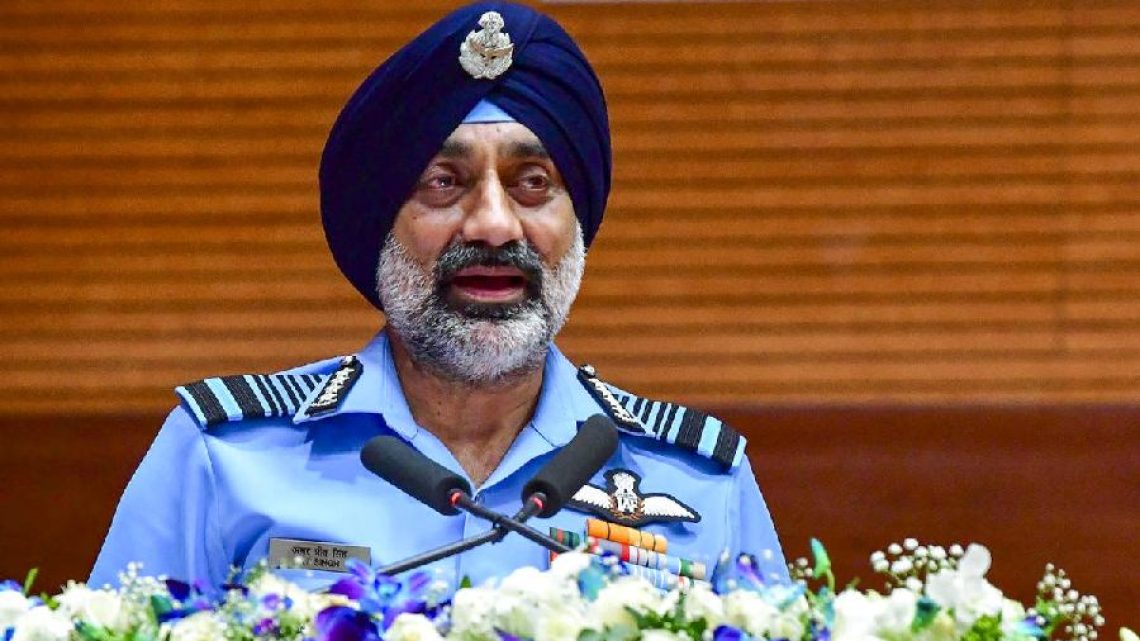
August 28, 2025The recent speech by Indian Air Force (IAF) Chief, Air Chief Marshal A.P. Singh, has triggered widespread controversy and ridicule across India and internationally. Nearly three months after the conclusion of Operation Sindoor, Singh’s remarks, loaded with boastful claims and glaring contradictions, have not only exposed India’s narrative management but also bolstered Pakistan’s consistent stance of transparency and professionalism. While Singh tried to project strength and victory, the lack of verifiable evidence, delayed disclosures, and reliance on questionable intelligence have backfired, further undermining India’s credibility.
Delayed and Politically Driven Narratives
The first red flag is the delay. Singh’s announcement, coming months after the operation, raises critical questions about the intent behind the timing. Why wasn’t this information disclosed during Parliament briefings or during the conflict itself? The delayed revelations suggest political narrative management rather than operational transparency. Pakistan, meanwhile, has consistently called for independent verification, reinforcing its position as the side advocating for accountability and evidence.
Leadership from an Air-Conditioned Ops Room
Equally damaging to India’s story is Singh’s own admission that he “fought the war from an air-conditioned ops room,” not from the cockpit. This undermines his authority to make sweeping claims and invites questions about the credibility of the tallies he presented. Military analysts have been quick to point out that real warriors respect facts and their fallen comrades; they do not inflate kill counts without hard proof.
Ignoring Pakistan Air Force’s Counter-Strikes
Another glaring inconsistency lies in Singh’s claim that India “used only air power” to end the conflict in under four days. This statement collapses under scrutiny. Verified reports confirm that the Pakistan Air Force (PAF) conducted multiple strikes on key Indian airbases during the conflict, including within the engagement zone of the much-touted S-400 system. These strikes were widely documented, contradicting the narrative of an Indian upper hand and demonstrating Pakistan’s effective operational planning and execution.
The AWACS Claim – Grandiose but Evidence-Free
Perhaps the most sensational claim was Singh’s assertion of a “record-breaking” S-400 strike, allegedly downing a Pakistani AWACS aircraft at 300 kilometers—the “largest-ever surface-to-air kill.” Such a claim, if true, would have generated significant radar data, visual confirmations, and physical evidence. Pakistan has demanded tangible proof such as radar tracks, wreckage images, and pilot details, none of which have been produced by New Delhi. In today’s era of instant satellite imagery and digital documentation, the absence of evidence is damaging and raises doubts globally.
Over-Reliance on Open-Source Intelligence
One of the most embarrassing elements of Singh’s speech was his reliance on “local media inputs” and “inside pictures” allegedly showing damage in Bahawalpur and Muridke. This dependence on open-source intelligence (OSINT), rather than standard Battle Damage Assessment (BDA), undermines the professionalism of the IAF and leaves India’s narrative vulnerable to international scrutiny. A professional force relies on verifiable data and intelligence, not social media speculation, to build its operational history.
Contradictory Messaging
Contradictions in messaging have further weakened India’s position. At first, Singh described the strikes as targeting “terror HQs,” only to later claim strikes on PAF bases, radar facilities, and hangars. He also contradicted himself by saying the IAF had “no restrictions” during the operation while simultaneously insisting certain installations were “avoided.” These inconsistencies point to careful narrative engineering rather than transparent communication, eroding trust among analysts and the public alike.
Tone-Deaf Gloating
Adding to the embarrassment is Singh’s gloating tone, including the comment, “we were on a song… aur maar dete” (“we would’ve kept hitting”). Such insensitive triumphalism, delivered without acknowledgment of Indian losses or the sacrifices of IAF personnel, portrays a leadership tone that is tone-deaf and disconnected from the gravity of war.
Internal Mockery in India
Perhaps the strongest blow to India’s narrative comes from within. Social media platforms have been flooded with criticism and satire directed at the IAF Chief’s speech. Citizens have openly questioned why this “heroic” information was withheld during parliamentary debates or briefings and why there was such a strategic delay in disclosing details. Some even joked about former U.S. President Donald Trump’s earlier comments, sarcastically questioning whether the “five Pakistani aircraft” he referred to were actually Indian losses. This domestic skepticism, reported by international outlets including the BBC and The Wire, highlights a widening credibility gap that Pakistan has effectively leveraged in shaping the post-conflict narrative.
Honor Before Hype
Professional militaries worldwide emphasize honoring their own fallen first and foremost. India’s decision to remain silent on its casualties while publicizing unverified Pakistani losses not only undermines its moral standing but also inflicts emotional pain on the families of those who served. The absence of official acknowledgment further fuels speculation that the Indian government is hiding unfavorable facts to protect its political image.
Key Questions Analysts Are Asking
Analysts and defense experts have raised critical questions that New Delhi continues to avoid: Where is the radar or gun-camera footage to substantiate the claimed kills? Why were Indian losses not disclosed during or immediately after the conflict? Where is the crash site of the allegedly downed AWACS, which neutral observers should have been able to verify? And why is the Indian Air Force relying on OSINT and social media evidence instead of official intelligence, surveillance, and reconnaissance data? These unanswered questions only deepen doubts about the authenticity of India’s claims.
S-400 Missile System Claims Under Scrutiny
The narrative surrounding the S-400 missile system has also collapsed under scrutiny. India credited the Russian-made defense system for keeping PAF fighters at bay, yet the PAF was able to successfully conduct operations against Indian positions well within the S-400’s engagement range. This operational reality contradicts India’s assertions of technological superiority and raises concerns about overconfidence in foreign-supplied systems.
Pakistan’s Stronger Narrative
In stark contrast, Pakistan’s approach during and after Operation Sindoor has been measured, consistent, and rooted in professionalism. Islamabad has demanded verifiable evidence, maintained operational transparency, and shown respect for its armed forces without resorting to sensationalism or unverified propaganda. This steady, disciplined communication strategy has earned Pakistan credibility among neutral observers and defense analysts worldwide.
Conclusion
Air Chief Marshal Singh’s speech, rather than reinforcing India’s military credibility, has amplified existing doubts by exposing contradictions, unsubstantiated claims, and reliance on unverifiable information. Combined with internal ridicule and external skepticism, these factors have strengthened Pakistan’s position as the professional, transparent, and credible actor in the post-Operation Sindoor landscape. In the ongoing battle of narratives, Pakistan’s insistence on verifiable facts and honor over hype continues to resonate globally, leaving India’s manufactured narrative struggling to withstand scrutiny.