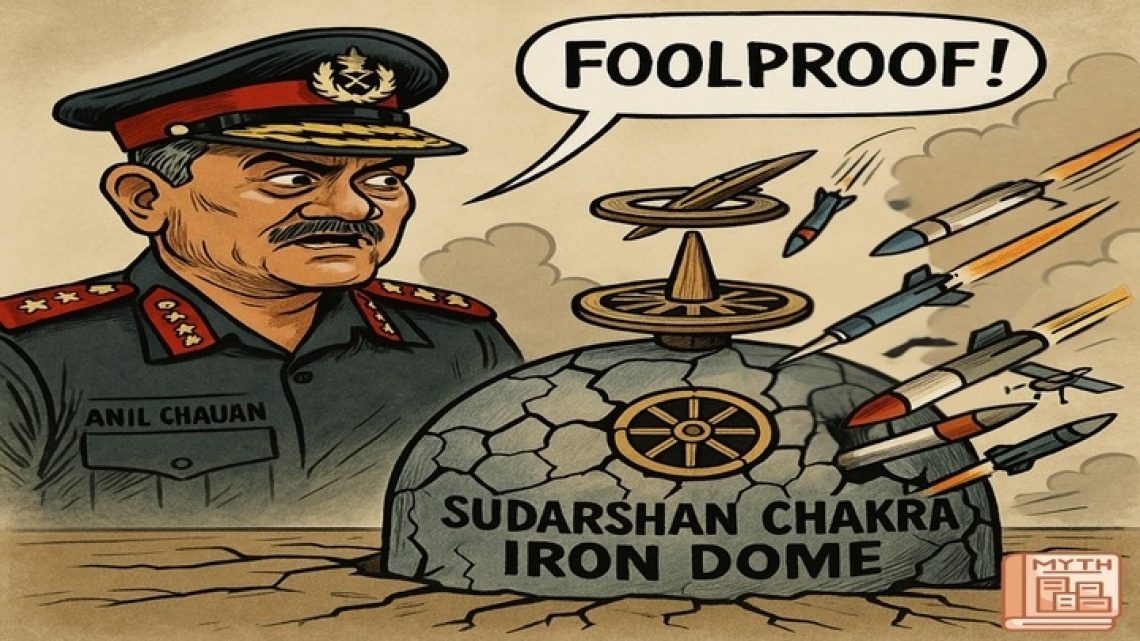
Sudarshan Chakra, India’s Iron Dome: A Flawed Dream of Chief of Defence Staff General Anil Chauhan
August 27, 2025India’s Sudarshan Chakra missile defense system, introduced by Chief of Defence Staff General Anil Chauhan, is presented as both a protective shield and an offensive weapon. Inspired by Hindu mythology, the system aims to defend India while also being capable of striking back. However, despite its grand promises, Sudarshan Chakra faces numerous operational, technological, and strategic challenges that could put both national security and regional peace at risk.
The Symbolism of Sudarshan Chakra
The name ‘Sudarshan Chakra’ is drawn from Hindu mythology, symbolizing a powerful weapon used by Lord Krishna. By adopting this name, the defense system is portrayed as a tool of swift and decisive action. While the use of such a powerful symbol adds appeal, it also creates a dangerous illusion of invincibility. This portrayal could mislead policymakers into believing that military power alone can guarantee peace, when in fact, it could fuel conflict.
Geographical Challenges in Defending India
India’s vast land borders, covering diverse landscapes, present a major challenge for Sudarshan Chakra. Unlike Israel’s Iron Dome, which protects a smaller, more concentrated area, India’s defense needs extend across a huge geographical area. The size and varied nature of India’s borders create unavoidable gaps in coverage. These gaps could be exploited by adversaries, who could coordinate simultaneous attacks to overwhelm the defense system, making it difficult to fully protect the nation.
Reliance on Unproven Technologies
Sudarshan Chakra relies heavily on advanced technologies such as hypersonic missile interception, quantum communication, and directed-energy weapons. These technologies are still under development, and the system is not expected to be fully operational until 2035. This heavy dependence on future technologies creates a risk of complacency, leaving India exposed to threats that the system may not be able to handle in the short term. The overreliance on future capabilities might distract decision-makers from addressing the immediate defense needs of the country.
The Offensive Nature of Sudarshan Chakra
While Sudarshan Chakra is marketed as a defensive system, it also includes offensive capabilities. The system is designed to not only defend against external threats but also launch counterattacks. This dual-purpose nature raises concerns about escalating conflicts. The possibility of a preemptive strike by adversaries or the escalation of tensions could destabilize the region, turning a defensive measure into an offensive tool that increases the likelihood of war.
Cybersecurity Risks in Integrated Systems
Integrating various military branches, satellite networks, and cyber defenses into Sudarshan Chakra creates significant cybersecurity risks. Even a minor breach in one of these interconnected systems could delay responses, cause confusion, or lead to miscommunication. These risks could undermine the effectiveness of the system, making it more vulnerable to exploitation by adversaries who might take advantage of weaknesses in the defense network.
Unrealistic Comparisons with Israel’s Iron Dome
Comparing Sudarshan Chakra to Israel’s Iron Dome is misleading. Israel’s Iron Dome has been successful in defending a small territory from short-range rockets. Sudarshan Chakra, however, is tasked with protecting against long-range missiles, drones, and cyber threats across a much larger geographical area. This comparison raises unrealistic expectations about the system’s capabilities. Even other advanced systems, like Russia’s S-400, have shown weaknesses under pressure, further casting doubt on Sudarshan Chakra’s ability to withstand large-scale attacks.
Economic Burdens and Strategic Overreach
The costs of developing and maintaining a system like Sudarshan Chakra are enormous. The system relies on global supply chains for essential components, creating long-term sustainability issues. This financial burden could divert critical resources from broader defense modernization or national development projects, weakening India’s overall strategic position. The huge cost could also limit India’s ability to invest in other defense priorities, creating an imbalance in national security spending.
The Illusion of Invincibility
Sudarshan Chakra’s grand vision, supported by its mythological name and the promise of military superiority, creates an illusion of invincibility. General Chauhan’s statement that “peace without power is utopian” reflects a belief that military might alone can bring security. However, this approach risks provoking an arms race and escalating conflicts rather than fostering peaceful coexistence. By focusing on overwhelming military power, India could inadvertently destabilize the region, increasing the risk of conflict rather than ensuring peace.
A Dangerous Focus on Military Might
Sudarshan Chakra reflects India’s growing reliance on military strength to ensure security. General Chauhan’s comments suggest that military power is essential for peace, but this could alienate neighboring countries and increase tensions in the region. By focusing too much on military might and not enough on diplomatic efforts, India risks creating a volatile environment where conflict becomes more likely rather than less.
A Gamble for Regional Stability
Sudarshan Chakra is an ambitious attempt to strengthen India’s defense capabilities, but it also carries significant risks. The system’s reliance on unproven technologies, its complex integration across multiple branches of the military, and its challenge of covering India’s vast geography create vulnerabilities. Without a balance between military innovation and practical strategy, Sudarshan Chakra could become an ineffective system that undermines India’s security and destabilizes regional peace.
Conclusion: The Dangers of Overconfidence
India’s Sudarshan Chakra project, though impressive in its ambition, represents a risky pursuit of military power. The system’s complexity, dependence on future technologies, and its geographical and strategic limitations could lead to unforeseen vulnerabilities. Rather than guaranteeing peace, Sudarshan Chakra may provoke conflict and contribute to regional instability. To ensure true security, India must balance its technological ambitions with thoughtful diplomatic engagement, recognizing that military strength alone cannot guarantee lasting peace.