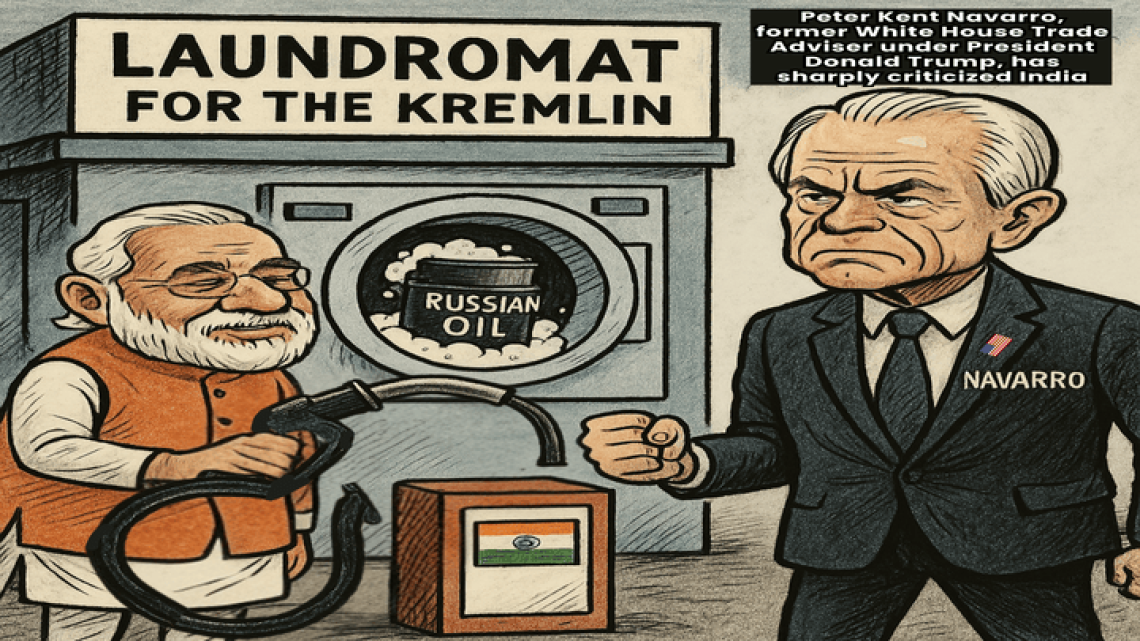
India as a “Laundromat for the Kremlin”: Navarro Criticizes India’s Russian Oil Trade
August 26, 2025Peter Kent Navarro, former White House Trade Adviser under President Donald Trump, has sharply criticized India for its growing trade with Russia, particularly the import of Russian oil. Navarro argues that India’s actions are undermining global sanctions, funding Russia’s war in Ukraine, and harming U.S. economic interests. His comments raise important questions about India’s role in the global energy market and its strategic position in the U.S.-India relationship.
India’s Rising Oil Imports from Russia
India’s oil imports from Russia have surged since Russia’s invasion of Ukraine. Before the war, India bought less than 1% of its oil from Russia, but this figure has now risen to 35-40%. Navarro calls this shift “nonsense,” arguing that India’s reliance on Russian oil is unnecessary and harmful. By continuing to buy Russian oil, India is contributing to Russia’s war effort and undermining global attempts to isolate Moscow.
India’s Role in Refining Russian Oil
Navarro accuses India of acting as a “global clearinghouse for Russian oil.” India buys cheap Russian crude, refines it, and then sells the refined products at a higher price. This process allows India to profit while helping Russia avoid the full impact of international sanctions. By continuing this practice, India is indirectly funding Russia’s military actions in Ukraine, Navarro argues.
Funding Russia’s War Effort
Navarro highlights the direct link between India’s oil trade and Russia’s ability to fund its war in Ukraine. The money India makes from refining and selling Russian oil is being used to purchase weapons and support the ongoing invasion. According to Navarro, India’s economic activities are enabling Russia to continue its military operations, even as the U.S. and its allies provide military aid to Ukraine.
Protectionist Trade Policies Straining U.S.-India Relations
In addition to criticizing India’s oil trade with Russia, Navarro takes aim at India’s protectionist trade policies. He points to India’s 25% tariffs and additional “Maharaja tariffs,” which he argues contribute to a growing U.S. trade deficit. These tariffs make it harder for American businesses to access the Indian market, Navarro claims, hurting U.S. workers and companies.
Impact of High Tariffs on U.S. Businesses
India’s high tariffs limit the ability of U.S. companies to compete in the Indian market, according to Navarro. These protectionist policies have led to a significant U.S. trade deficit with India. Navarro argues that these tariffs give India an unfair advantage, while American businesses are unable to fully benefit from the large and growing Indian economy.
India’s Growing Ties with China
Navarro also raises concerns about India’s increasing ties with China, particularly its relationship with President Xi Jinping. While India has historical tensions with China, Navarro warns that India’s cooperation with China could complicate its relationship with the U.S. He argues that India’s failure to fully align with Western sanctions against Russia, combined with its closer relationship with China, undermines U.S.-India strategic cooperation.
India as a “Laundromat for the Kremlin”
Navarro’s most pointed criticism is his description of India as a “laundromat for the Kremlin.” He argues that by refining and selling Russian oil, India is allowing Russia to bypass sanctions and continue its war in Ukraine. Navarro’s comments suggest that India is enabling Russia’s war effort, making the country complicit in prolonging the conflict.
Undermining Global Sanctions
India’s continued oil trade with Russia is undermining global sanctions, Navarro claims. While the U.S. and its allies have imposed sanctions to isolate Russia economically, India’s oil trade allows Russia to generate revenue and fund its military campaign. This situation raises questions about the effectiveness of international sanctions when key countries like India continue to engage in trade with Russia.
The Growing U.S.-India Trade Deficit
Navarro’s comments reflect broader economic tensions between the U.S. and India. The U.S.-India trade deficit has long been a point of contention, with India’s protectionist policies limiting American access to its market. Navarro argues that India’s tariffs and trade practices harm U.S. businesses, making it harder for them to compete on equal footing in India’s market.
India’s Strategic Autonomy and Economic Interests
India’s refusal to fully align with Western sanctions is often seen as a stance of strategic autonomy. India, which has long adhered to a non-aligned foreign policy, seeks to maintain its independence in global politics. However, Navarro’s critique suggests that India’s strategic autonomy comes at the cost of alienating key partners like the U.S., particularly when it continues to trade with Russia.
Global Impact of India’s Oil Trade with Russia
India’s oil trade with Russia has significant global implications. By continuing to buy and refine Russian oil, India is undermining the sanctions that are meant to pressure Russia economically. This trade not only provides Russia with much-needed revenue but also complicates global efforts to isolate Russia and weaken its war effort in Ukraine.
India’s Complex Geopolitical Position
India’s actions reflect a complex balancing act between economic interests and global strategic alliances. While India seeks to maintain its independence and protect its energy needs, its continued trade with Russia risks alienating Western partners, particularly the U.S. India’s role in the global energy market is becoming increasingly difficult to reconcile with its broader geopolitical goals.
The Future of U.S.-India Relations
Navarro’s comments suggest that the future of U.S.-India relations may depend on how India navigates its complex geopolitical situation. While both countries share common interests, such as countering China’s rise, India’s trade with Russia and protectionist policies create significant obstacles to deeper cooperation. The U.S. will likely continue to pressure India on these issues, particularly its oil trade with Russia and its failure to fully align with global sanctions.
Conclusion: India’s Role in Global Geopolitics
Peter Navarro’s sharp criticism of India’s oil trade with Russia raises important questions about the country’s role in global geopolitics. India’s increasing dependence on Russian oil and its protectionist trade policies are complicating its relationships with the U.S. and Western nations. While India seeks to maintain strategic autonomy, its actions may undermine global efforts to isolate Russia and threaten its own long-term economic and diplomatic interests. The future of U.S.-India relations will depend on India’s ability to balance its national interests with its global obligations, navigating the delicate path between economic growth and international cooperation.