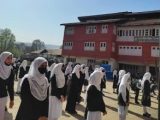
Mehbooba Slams Takeover of FAT Schools as Attack on Kashmir’s Identity
August 25, 2025The recent takeover of Falah-e-Aam Trust (FAT) schools in Indian Illegally Occupied Jammu and Kashmir (IIOJK) has sparked sharp criticism, particularly from local political leaders. Peoples Democratic Party (PDP) President Mehbooba Mufti has described this move as an attack on the region’s education system and cultural identity. She argues that FAT schools, which have long maintained a balance between modern and Islamic education, are integral to Kashmir’s heritage and education system.
FAT Schools: A Crucial Part of Kashmir’s Education System
For decades, FAT schools have played a vital role in providing education in Jammu and Kashmir. The schools were founded to offer both modern education and Islamic teachings, catering to the unique needs of the Kashmiri population. Thousands of students have passed through these institutions, which have also provided employment for teachers and staff. Mufti’s criticism centers on how the government’s takeover of these schools threatens the region’s educational system and undermines its cultural identity.
Mufti’s Criticism: Breach of Trust by the Government
Mehbooba Mufti has criticized the government’s actions, describing the takeover of FAT schools as a breach of trust. She recalled that while in office, she resisted pressure from New Delhi to ban Jamaat-e-Islami and seize its assets, which is a key reference point in her argument. According to Mufti, what New Delhi failed to impose during her tenure is now being executed by those who claim to represent the people of Jammu and Kashmir. This move, she argues, undermines the region’s autonomy and further erodes its political and cultural fabric.
The Role of FAT Schools in Preserving Kashmir’s Identity
FAT schools have long been seen as a bridge between modern education and Kashmir’s Islamic traditions. These schools have helped preserve the region’s cultural heritage while providing contemporary education. The government’s decision to take over these schools, Mufti argues, is not just an attack on education but an effort to erase Kashmir’s identity. The institutions’ role in balancing these elements has been central to their success, and their takeover is seen by many as part of a broader effort to impose an external narrative on the region.
The National Conference’s Role: Power Over People’s Education
While Mufti leads the criticism, Inam Un Nabi, spokesperson for the Awami Itehaad Party (AIP), has also criticized the National Conference (NC)-led government for its handling of the issue. Nabi accused the NC government, particularly Education Minister Sakina Yatoo, of throwing over 51,000 students into uncertainty. The confusion caused by contradictory orders, he argued, has made it clear that the NC is prioritizing political games over the future of Kashmiri children.
The Impact on Kashmiri Students: Disruption of Their Future
The takeover of FAT schools has immediate consequences for over 51,000 students enrolled in these institutions. With the future of these schools uncertain, students are left in limbo, unable to plan for their education. The government’s decision to change the status of these schools has placed an entire generation of students at risk. Nabi’s comments highlight how this disruption is a direct result of political maneuvering, which overlooks the educational needs of the students.
The National Conference’s Inaction: A Missed Opportunity
Inam Un Nabi pointed out that while the BJP did not dare to take such a drastic step in the last decade, the NC-led government executed the takeover soon after assuming power. Nabi criticized the NC for acting swiftly on an issue that negatively affects Kashmiri students while prioritizing power over the well-being of the people. This move, he argued, exposes the NC’s failure to protect the region’s educational system and reflects a shift in its political priorities.
Cultural and Educational Identity at Risk
The FAT schools controversy is not just about education; it is about Kashmir’s identity. Mufti emphasized that these schools have long been a part of the region’s cultural landscape, blending modern education with Islamic teachings. The government’s attempt to take control of these schools is seen by many as part of a larger agenda to weaken Kashmir’s cultural identity and impose a uniform, centralized education system.
Political Control Over Education: A Dangerous Precedent
The government’s move to take over FAT schools sets a dangerous precedent for the future of education in Jammu and Kashmir. Political interference in the education system undermines the autonomy of local institutions and threatens to replace them with a system that aligns with the central government’s interests. This shift is a stark reminder of how education can be used as a tool for political control rather than for empowering students and preserving the cultural integrity of a region.
The Way Forward: Defending Kashmir’s Educational Autonomy
To protect the future of Kashmiri students and preserve the region’s cultural identity, there is an urgent need to restore educational autonomy. Local institutions like FAT schools must be allowed to operate independently, free from political interference. The resistance to the takeover must continue, with a focus on ensuring that Kashmir’s educational system remains intact and that students have access to the learning opportunities they deserve.
Conclusion: Protecting Kashmir’s Cultural Identity Through Education
The takeover of FAT schools represents more than just an administrative change; it is a direct attack on the educational and cultural identity of Kashmir. Mehbooba Mufti’s criticism, along with the opposition from local political groups like the AIP, highlights the growing concern over the loss of autonomy in Jammu and Kashmir. The resistance to this move must continue, with a focus on maintaining local control over education and ensuring that the region’s unique identity is protected. The future of Kashmir’s youth depends on preserving its educational system and cultural heritage.