Modi Government Deploys 3 CRPF Battalions in Jammu to Tighten Military Grip on IIOJK
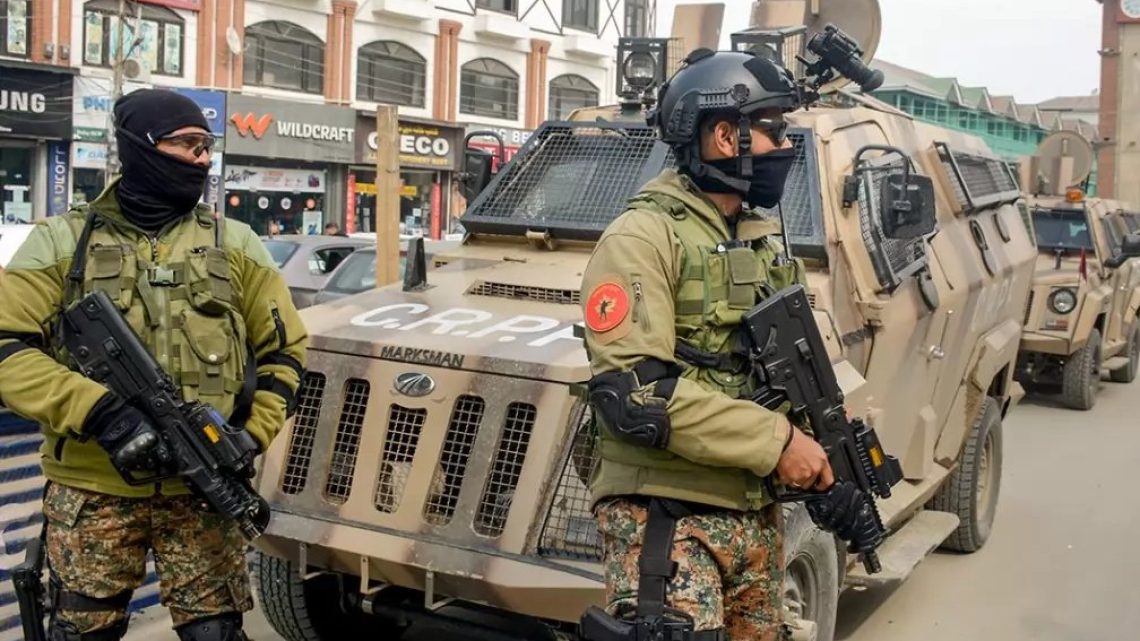
August 23, 2025The recent deployment of three Central Reserve Police Force (CRPF) battalions in Jammu by the Modi government has raised serious concerns about the growing militarization of Indian Illegally Occupied Jammu and Kashmir (IIOJK). While officially aimed at strengthening counter-terrorism efforts, this move is more about reinforcing India’s military control over the region. By replacing the Indian Army with CRPF battalions, the government further consolidates its grip on IIOJK, suppressing the Kashmiri people under the guise of security measures.
CRPF Replaces Army in Internal Security
The replacement of Indian Army units with CRPF battalions in Jammu marks a shift in security operations, giving the Union Home Ministry direct control over internal security. Though the change is justified as a measure to improve counter-terrorism operations, it further tightens the central government’s control over the region. This shift moves more of IIOJK’s internal governance under the central government, sidelining local leadership and increasing militarization.
Militarization of Jammu and Kashmir
The deployment of CRPF battalions adds to the ongoing militarization of IIOJK. This is not just about security; it is part of a broader strategy to keep the region under firm control. The presence of more security forces in the region makes everyday life more difficult for Kashmiris, as they continue to live under constant surveillance and military presence. This shift in force structure increases India’s military hold, leaving little room for local autonomy or resistance.
Suppression of Local Resistance
This increased militarization is not aimed at ensuring peace but at suppressing local resistance. The Indian government uses counter-insurgency operations to crush dissent, and the presence of CRPF forces only deepens this oppression. Under laws like AFSPA (Armed Forces Special Powers Act), Indian forces can operate with total impunity, leading to widespread human rights abuses. This shift in security is a clear attempt to prevent any form of local resistance and to enforce India’s control through force.
Strengthening Control Through Repression
The deployment of CRPF battalions is part of a larger effort to suppress the Kashmiri population and maintain control. The central government is increasingly taking charge of internal security in the region, sidelining local governance structures. This centralization of power consolidates India’s control, reducing any meaningful opposition to its policies. Kashmiris face more direct repression, making it increasingly difficult for them to live freely or express political dissent.
Human Rights Violations Under Occupation
Human rights violations in IIOJK remain rampant. The presence of CRPF forces only exacerbates this situation. Widespread abuses, including arbitrary detentions, custodial torture, sexual violence, and killings, are ongoing, with little accountability. The centralization of control under the Union Ministry and the unchecked power of security forces ensure that the human rights of Kashmiris continue to be violated. These abuses are systematic and continue to be justified under the pretext of maintaining security.
Demographic Engineering and the Changing Landscape
In addition to militarization, the Modi government has been implementing policies to alter the region’s demographic makeup. The recent move to increase the military presence and replace local governance with central control fits into a broader strategy of demographic engineering. By enabling non-Kashmiri settlers to take root in the region and making life increasingly difficult for locals, India aims to change the region’s population dynamics, disregarding international laws and UN resolutions.
Operation Sindoor and Intensified Repression
Following the failure of Operation Sindoor, India has stepped up its Counter Insurgency and Anti-Terrorism Operations (CASOs). These operations have further criminalized Kashmiris, treating them as enemies of the state. The increased deployment of CRPF battalions ensures that the military continues its crackdown on local resistance. The Kashmiris are left with no space for normal life, as these operations further isolate and oppress the population.
Amendments to the Kashmir Reorganization Bill
Recent amendments to the Kashmir Reorganization Bill demonstrate the Modi government’s intention to tighten its grip on the region. These changes seek to reduce the power of the state government, leaving it as a symbolic figure under direct control from New Delhi. With local authority minimized, the central government is seeking to eliminate any potential challenge to its rule, further consolidating its control over IIOJK.
Kashmiris’ Demand for Self-Determination
Despite these oppressive measures, the people of Indian Illegally Occupied Jammu and Kashmir (IIOJK) remain determined in their demand for self-determination. The Kashmiris’ right to decide their own future is supported by international law and UN resolutions. However, the Indian government continues to deny this right, and instead, has intensified its efforts to suppress the population and erase the region’s distinct identity. Kashmiris remain firm in their pursuit of freedom, refusing to accept subjugation under military rule.
International Inaction and the Kashmir Issue
While the situation in IIOJK has drawn attention from human rights groups, the international response has largely been muted. Despite the ongoing violations and India’s disregard for international law, the global community has not taken substantial action. This silence from the international community allows India to intensify its repression and militarization of the region without facing any real consequences, making a peaceful resolution even more distant.
The UNSC and the Kashmir Issue
The United Nations Security Council (UNSC) has long called for a peaceful resolution to the Kashmir conflict, including a plebiscite to allow the people of Indian Illegally Occupied Jammu and Kashmir (IIOJK) to decide their future. India’s continued militarization of the region contradicts these resolutions and further entrenches its control over Indian Illegally Occupied Jammu and Kashmir (IIOJK). A lasting solution can only be achieved through adherence to international laws and respect for the Kashmiri people’s right to self-determination.
A Path Forward: Peace and Justice
The only way to resolve the Indian Illegally Occupied Jammu and Kashmir (IIOJK) issue is through peace, dialogue, and respect for human rights. Militarization and repression have failed to bring lasting peace and only fuel further resentment and conflict. A just resolution, based on the rights of the Kashmiri people and in accordance with international law, is the only way forward. The international community must act to support the people of Indian Illegally Occupied Jammu and Kashmir (IIOJK) in their quest for self-determination and justice.
Conclusion
The Modi government’s decision to deploy CRPF battalions in Jammu is a clear indication of its strategy to further militarize IIOJK and suppress the Kashmiri people. By consolidating control, suppressing opposition, and using force to maintain its grip, India is pushing the region toward permanent occupation. This move only deepens the suffering of Kashmiris and prolongs the conflict. The international community must demand action to hold India accountable and work toward a peaceful solution that respects the rights of the Kashmiri people. Only through dialogue and justice can lasting peace be achieved in the region.