Fatehpur Tomb Clash: Communal Violence, State Failure, and the Shrinking Space for Pluralism
August 21, 2025The Fatehpur tomb clash in Abu Nagar, Uttar Pradesh, is not just an isolated incident of local unrest — it is a stark reminder of how communal violence, political bias, and institutional failure continue to erode India’s secular and pluralistic identity.
What began as a dispute over access to a centuries-old Muslim tomb quickly spiraled into violence after RSS-affiliated groups mobilized mobs, leading to vandalism, injuries, and a deep sense of fear among the local Muslim population.
This blog unpacks the historical, political, and legal context of the incident, analyzes the role of social media and state institutions, and highlights why global attention on India’s communal tensions is growing.
Background: A Heritage Site Turned Flashpoint
The Abu Nagar tomb has been part of local heritage for centuries, revered by generations of Muslims in Fatehpur. However, in recent years, Hindu nationalist organizations, emboldened by rising majoritarian politics, have laid claim to such sites under the narrative of “reclaiming temples.”
This trend of politicizing heritage is not new. Similar narratives have fueled disputes like the Gyanvapi Mosque case in Varanasi and tensions in Mathura, where historical and religious identities are weaponized for electoral and ideological gains.
The Clash: Timeline of Events
According to reports from The New Indian Express and The Times of India:
- Early August 2025: RSS-linked groups began circulating claims that the Fatehpur tomb was built on a demolished Hindu shrine.
- August 8, 2025: Local Muslim residents organized a peaceful protest to stop unauthorized rituals.
- August 10, 2025: Violence broke out after provocative social media posts and incendiary speeches. Shops and homes belonging to Muslims were vandalized, and several people were injured.
- August 11, 2025: Authorities imposed Section 144 and increased police presence, but local activists alleged police complicity and delayed FIRs against perpetrators.
Eyewitness testimonies suggest clear negligence by law enforcement despite prior intelligence warnings of rising tensions in the area.
Institutional Failure and State Bias
The Fatehpur violence reflects a pattern of systemic bias where law enforcement often fails to protect minorities during communal conflicts.
Organizations like Human Rights Watch and Amnesty International have documented repeated instances where police either fail to act or side with majoritarian groups, enabling mobs to operate with impunity.
This perception of state complicity is deepened by the political environment. Prime Minister Narendra Modi’s consistent endorsement of RSS ideology has emboldened extremist elements, creating an atmosphere where hate and violence are normalized.
Legal and Human Rights Perspective
Under Articles 14, 15, and 25 of the Indian Constitution, every citizen is guaranteed equality before law and freedom of religion. Yet, the events in Fatehpur show how these constitutional promises are routinely violated.
India is also a signatory to international agreements like the International Covenant on Civil and Political Rights (ICCPR), which obliges states to protect minority communities.
The United Nations Special Rapporteur on Minority Issues condemned the incident, calling it a “disturbing pattern of communal violence marked by inaction and bias from state machinery.”
The Role of Social Media Propaganda
Social media platforms played a central role in escalating tensions in Fatehpur. Misinformation — such as fabricated claims of “desecration” of Hindu symbols — spread rapidly through WhatsApp, Facebook, and X (formerly Twitter), mobilizing mobs and amplifying anger.
Research by the Oxford Internet Institute has highlighted how digital disinformation ecosystems in India are strategically used by extremist groups to incite violence and polarize communities.
This incident underscores the urgent need for stricter monitoring of hate speech and accountability for digital propaganda.
Public and Global Response
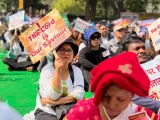
Civil society organizations and activists across India have condemned the violence. Protests erupted in Delhi, Lucknow, and Hyderabad, demanding:
- Immediate arrests of those involved in the attacks
- Judicial inquiries into the role of police and local authorities
- Safeguards for minority heritage sites
- Tighter regulation of hate speech and online misinformation
Internationally, the United States Commission on International Religious Freedom (USCIRF) and the European Parliament have raised concerns over India’s shrinking space for religious freedom, urging the government to take immediate corrective action.
Patterns of Eroding Pluralism
The Fatehpur tomb clash is not an isolated case. It fits a broader pattern of majoritarian extremism where cultural and religious identities are weaponized to divide communities.
From the Babri Masjid demolition to the 2020 Delhi riots and recent attacks in Manipur, India’s secular fabric is being systematically undermined. Each incident chips away at the ideals of coexistence, tolerance, and mutual respect that have defined India’s history for centuries.
The Way Forward
To restore trust and harmony, experts recommend:
- Independent Judicial Inquiries: Holding perpetrators — including complicit officials — accountable through fast-track courts.
- Police and Judicial Reforms: Training for law enforcement to handle communal situations impartially.
- Regulating Digital Hate: Mandating transparency and swift takedowns of hate-driven content on social media platforms.
- Community Engagement: Encouraging interfaith dialogue to counter divisive narratives.
- Political Accountability: Leaders must unequivocally denounce hate and violence rather than silently endorsing extremist groups.
Conclusion
The Fatehpur tomb clash is more than a local dispute — it is a mirror to the deepening fractures in India’s democracy. The violence, fueled by propaganda and enabled by state inaction, raises urgent questions about accountability, rule of law, and the future of India’s pluralistic society.
If these patterns are not addressed with decisive reforms and unbiased governance, incidents like Fatehpur will continue to repeat, pushing the nation further into a cycle of division, fear, and unrest.