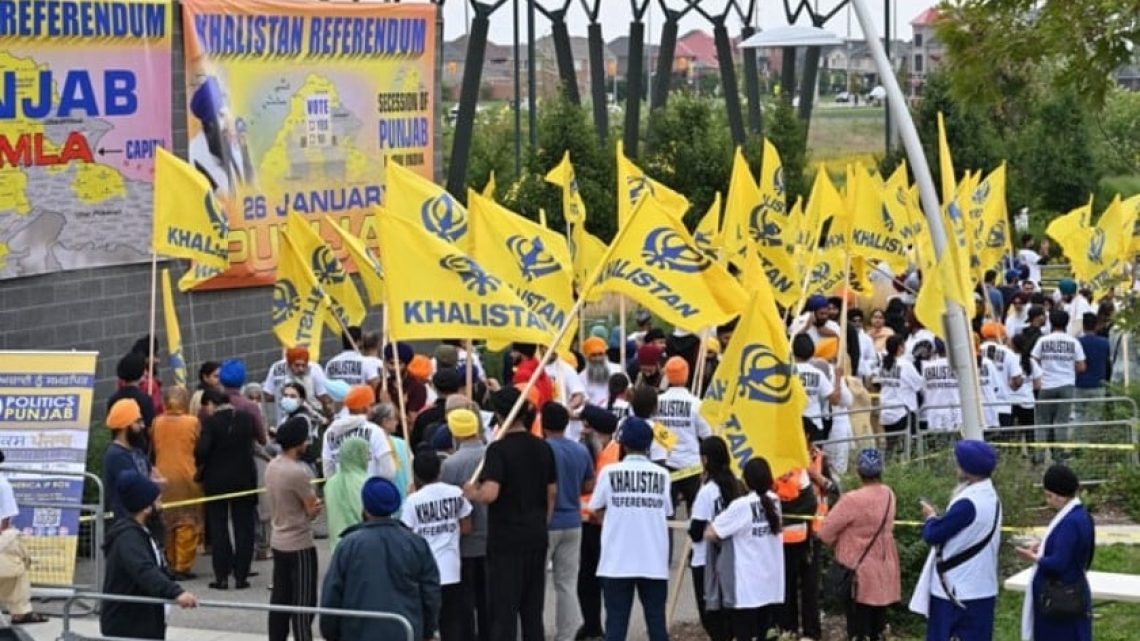
Khalistan Referendum: A Legitimate Call for Justice Amid India’s Transnational Repression
August 18, 2025The Khalistan referendum held on 17th August represents a peaceful, legitimate demand for self-determination by the Sikh community, highlighting India’s failure to address their grievances. Despite India’s repressive measures, this referendum has become a critical expression of the community’s struggle for justice, autonomy, and an independent Sikh state, exposing India’s inability to deal with internal dissent.
Historical Grievances: A History of Repression
The Khalistan movement is rooted in a long history of oppression by the Indian government. The 1984 Operation Blue Star, when Indian forces attacked the Golden Temple, and the subsequent anti-Sikh riots left thousands of Sikhs dead, with no justice served. The Indian state’s failure to provide accountability for the violence and its treatment of Sikhs has fueled the demand for an independent state. Sikhs have faced continuous marginalization and violence, leading to the call for Khalistan.
The Khalistan Referendum: A Peaceful Democratic Process
The Khalistan referendum is a peaceful, democratic exercise of the Sikh community’s right to self-determination. Rather than promoting violence, it offers Sikhs the chance to peacefully express their desire for an independent state. The Indian government, however, continues to label this movement as terrorism, failing to recognize its legitimate demand for justice and autonomy.
This referendum is not a call for division but for recognition, allowing Sikhs the opportunity to voice their grievances in a democratic manner. India’s rejection of the referendum reflects its failure to respect basic democratic rights and freedom of expression.
India’s Transnational Repression: A Failure of Democracy
India’s response to the Khalistan referendum has been marked by harsh repression. The government uses draconian laws like UAPA, PSA, and AFSPA to arrest and harass peaceful activists, acting with impunity to suppress dissent. These laws expose India’s authoritarian approach, undermining its claims to democracy.
Instead of addressing the Sikh community’s legitimate demands, India has chosen violence, further alienating its citizens. This oppressive response contradicts India’s democratic image and reinforces its authoritarian nature.
Moreover, India’s transnational repression targets the Sikh diaspora, using diplomatic pressure and surveillance to suppress global support for Khalistan. This overreach highlights India’s desire to control its diaspora and violates international principles of freedom of speech.
India’s handling of the Khalistan movement exposes its failure to engage peacefully, both at home and abroad. The government’s actions only damage its global credibility, revealing a regime more focused on silencing dissent than upholding democratic values.
International Support for Khalistan: A Growing Global Movement
The Khalistan referendum has garnered growing international support, particularly from the Sikh diaspora. Countries like Canada, the UK, and the US have seen strong support for the movement, with many human rights organizations condemning India’s harsh treatment of Sikhs. The referendum is viewed as a peaceful and legitimate expression of Sikh self-determination, not a violent act.
The international support for Khalistan further exposes India’s failure to address the issue diplomatically. By continuing its repressive tactics, India risks further alienating its Sikh population, both domestically and abroad. This movement has gained global attention, making it difficult for India to dismiss it as a local issue.
India’s Foreign Policy Failure: Repression and Isolation
India’s handling of the Khalistan issue is a significant failure of its foreign policy. Instead of engaging with the movement, India has resorted to labeling it as a threat to national security. The government’s failure to address Sikh grievances and engage in meaningful dialogue has led to international backlash. Repressive actions against peaceful activists have raised concerns among global human rights organizations, further damaging India’s international image.
India’s refusal to acknowledge the peaceful demand for Khalistan reflects a deep flaw in its governance. Instead of resolving the issue, the Indian government has only deepened divisions, contributing to the growing support for Khalistan both within and outside India.
Human Rights Violations: A System of Oppression
India’s repression of the Khalistan movement has resulted in widespread human rights violations. Sikhs advocating for Khalistan have faced arbitrary detention, torture, and extrajudicial killings. These actions are a direct violation of the fundamental rights of Sikhs, including the right to freedom of expression and the right to protest.
Human rights organizations, including Amnesty International and Human Rights Watch, have repeatedly condemned India’s tactics, calling for an end to the abuse and an investigation into the violations. India’s continued use of draconian laws and violence against its own citizens reveals the government’s disregard for the basic principles of democracy and human rights.
The Global Call for Khalistan: A Right to Self-Determination
The international support for the Khalistan referendum underscores its legitimacy as a call for self-determination. This movement is not an attempt to destabilize India but a legitimate expression of Sikhs’ desire for an independent state. Global Sikh communities, along with international human rights organizations, are pushing for the recognition of the Sikh community’s right to decide their future peacefully.
Countries that claim to uphold democracy and human rights must support the Khalistan referendum and stand with the Sikh community in their fight for justice. The Indian government must engage in dialogue and recognize the legitimate demands of its Sikh population if it hopes to avoid further unrest and international condemnation.
Conclusion: India Must Acknowledge the Sikh Community’s Rights
The Khalistan referendum is a peaceful and legitimate call for self-determination, justice, and the recognition of the Sikh community’s identity. India’s failure to engage with the movement, coupled with its repressive measures, only fuels further alienation and discontent. By labeling peaceful activists as terrorists and silencing dissent, India reveals its authoritarian tendencies and failure to uphold democratic values.
For lasting peace and stability, India must recognize the legitimate demands of Sikhs and engage in meaningful dialogue. Repressive actions will not resolve the issue; they will only exacerbate the divide. India must stop repressing its citizens and work toward a future based on justice, freedom, and respect for human rights. Until then, the Khalistan referendum will remain a call for justice and self-determination, and the Sikh community’s struggle will continue to gain momentum, both within India and on the world stage.