Erasing Muslim Identity: The Targeting of Religious Sites in BJP-ruled States
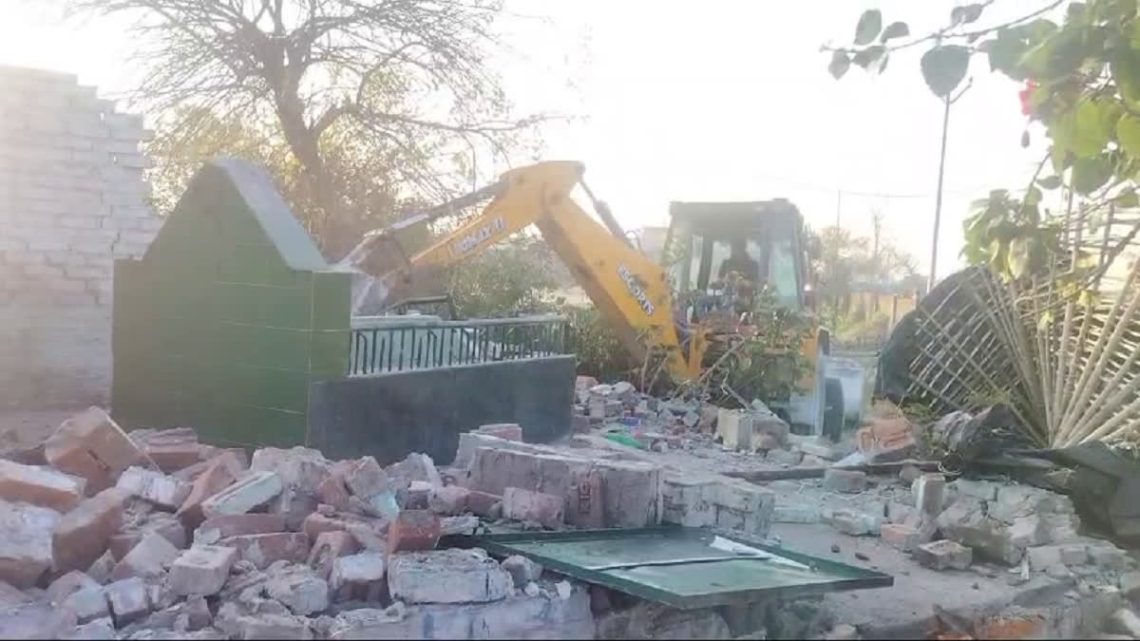
August 13, 2025The recent demolition of a Muslim shrine in Ramnagar, Uttarakhand, under the BJP-led government has raised significant concerns about the treatment of religious minorities in India. This act of destruction, justified under the guise of removing illegal structures, reflects a broader pattern of targeting Muslim religious sites across BJP-ruled states. The demolition of the Ramnagar shrine is more than an attack on a physical structure; it is part of a systematic effort to undermine Muslim cultural and religious identity in India. This article critically examines the implications of such actions, which threaten the country’s secular values and the rights of its religious minorities.
The Demolition of the Ramnagar Shrine
The demolition of the Ramnagar shrine, a religious site of significant importance to the local Muslim community, has sparked widespread outrage. Authorities claimed the shrine was an “illegal encroachment” and thus required demolition. However, local Muslims rejected this claim, asserting that the shrine had been in use for decades and was an integral part of their religious life. This event is not isolated; it reflects a larger effort to remove Muslim religious landmarks across India, raising concerns over the growing religious intolerance under the BJP-led government.
Hindutva Influence on Government Actions
The demolition of the shrine follows calls from Hindutva organizations that aim to reduce Muslim influence in the public sphere. These groups have long accused Muslim structures of being “illegal,” a justification often used to remove Muslim identity from visible spaces. The close alignment between the BJP government and Hindutva groups raises serious questions about the political motivation behind such actions. By allowing these organizations to influence government policies, the BJP is enabling the marginalization of religious minorities.
The “Illegal Encroachment” Claim: A Convenient Excuse
The justification for demolishing the Ramnagar shrine—based on claims of “illegal encroachment”—has been strongly contested by local Muslims. The shrine had been a longstanding place of worship, and labelling it an encroachment is seen as a pretext for destroying Muslim religious sites. This claim highlights a broader agenda to erase Muslim landmarks, making it easier to justify the destruction of religious structures without addressing their cultural or historical significance.
Targeting Muslim Heritage: A Systematic Strategy
The demolition of the Ramnagar shrine is not an isolated incident. Similar demolitions of Muslim religious sites have been reported across BJP-ruled states, often under the pretext of urban development or illegal construction. However, these actions disproportionately target Muslim places of worship, indicating a coordinated effort to erase Muslim cultural and religious heritage. This systematic targeting undermines the place of Muslims in India’s national identity and culture.
The Role of Police in Supporting Religious Intolerance
The involvement of the police in facilitating the demolition raises concerns about the role of law enforcement in BJP-ruled states. In Ramnagar, the police ensured the demolition proceeded without opposition, providing security for the authorities. This complicity in the destruction of a religious site is a troubling sign that law enforcement is not neutral, but rather supportive of actions that discriminate against Muslims. The role of the police in enabling such actions undermines public trust in the justice system, particularly among religious minorities.
Selective Enforcement of Laws: A Growing Concern
A key issue in the demolition of the Ramnagar shrine is the selective enforcement of building regulations. While Muslim sites are targeted for demolition under the guise of illegal encroachment, there is little scrutiny of religious structures belonging to other communities. This disparity in enforcement highlights the growing religious bias within the state, which increasingly fails to protect Muslim religious practices and heritage. The lack of equal treatment under the law serves to further marginalize the Muslim community.
The Rise of Mob Violence in BJP-ruled States
The targeting of Muslim religious sites is not the only form of violence Muslims are facing in BJP-ruled states. A recent incident in Shahjahanpur, Uttar Pradesh, saw a Muslim truck driver beaten to death by a mob on suspicion of carrying cattle remains. This attack is part of a wider trend of mob violence targeting Muslims, often under the pretext of cow protection laws. The presence of police officers who failed to intervene during the attack further highlights the growing culture of mob justice and impunity in these states.
Police Inaction in the Face of Mob Violence
The failure of the police to intervene in incidents of mob violence against Muslims is a recurring issue in BJP-ruled states. In Shahjahanpur, the police stood by as a mob attacked a Muslim truck driver, doing nothing to stop the violence. This inaction reflects a broader pattern of law enforcement turning a blind eye to hate-driven violence, especially when Muslims are the victims. The lack of action by police forces in such cases emboldens mob violence and sends a message that religious violence against Muslims will not be punished.
The Misuse of Cow Protection Laws
The cow protection laws, originally meant to safeguard cows from slaughter, have been increasingly misused to target Muslims. Extremist groups have used these laws to justify violence against Muslims, accusing them of carrying cattle remains without any evidence. In the case of the Shahjahanpur incident, the mob attacked the truck driver solely on suspicion, without any real investigation. This misuse of cow protection laws has resulted in widespread harassment and violence against Muslims, who are often targeted based on unfounded accusations.
Impunity for Perpetrators of Religious Violence
The growing trend of mob violence against Muslims is further compounded by the impunity enjoyed by the perpetrators. In many cases, the attackers are allowed to carry out violent acts without facing legal consequences. This lack of accountability emboldens those who engage in religious violence, allowing them to act with impunity. The failure to punish perpetrators not only perpetuates violence but also creates an atmosphere of fear and insecurity for Muslims, who feel increasingly vulnerable in BJP-ruled states.
A Political Agenda Behind Religious Persecution
The ongoing attacks on Muslims and the destruction of Muslim religious sites are not random acts of violence but part of a deliberate political strategy. The BJP’s alignment with Hindutva ideologies has led to the development of policies that seek to marginalize Muslims and suppress their cultural and religious expressions. These policies contribute to a growing climate of hostility and division, where Muslims are increasingly viewed as second-class citizens in India.
The Threat to India’s Secular Identity
India’s secular ideals are under increasing threat as the BJP-led government continues its efforts to marginalize Muslims. The destruction of Muslim religious sites, the rise of mob violence, and the selective enforcement of laws are all part of a broader strategy to suppress Muslim identity. If India is to remain true to its secular values, it must ensure that all religious communities are treated equally and protected from discrimination and violence. The government must take immediate steps to address this situation and restore confidence in the rule of law.
The Urgent Need for Action to Protect Religious Freedom
The ongoing targeting of Muslim religious sites and the rise of mob violence highlight the urgent need for action to protect religious freedom in India. The government must take decisive steps to prevent further attacks on Muslims and ensure that they are safe from violence and discrimination. This includes protecting their places of worship and ensuring that law enforcement takes appropriate action to prevent and respond to religious violence. The failure to protect Muslims from such violence only deepens divisions and undermines India’s commitment to equality and justice.
Conclusion: Upholding Secularism and Religious Pluralism
The recent demolition of the Ramnagar shrine and the attack on the Muslim truck driver in Shahjahanpur are part of a growing pattern of religious intolerance in India. These incidents reflect the increasing vulnerability of Muslims in BJP-ruled states, where their rights and freedoms are under constant threat. The government must take immediate steps to address these issues, protect religious minorities, and restore trust in the rule of law. By upholding the principles of secularism and religious pluralism, India can ensure that all its citizens, regardless of their faith, are treated equally and safely. Only through such actions can India preserve its democratic values and maintain unity among its diverse communities.