Mirwaiz Blasts Rotten Meat Scandal, Mehbooba Condemns Books Ban and Erasure of Truth in IIOJK
August 9, 2025Rotten Meat Scandal in IIOJK Unmasks Collapse of Governance and Public Safety
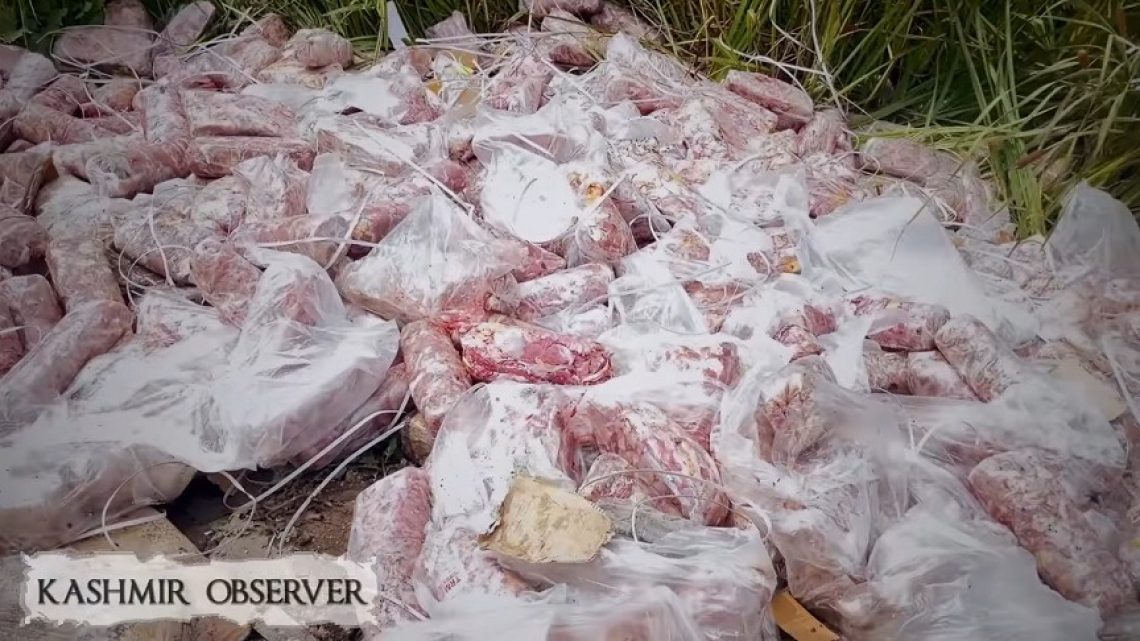
The people of Indian Illegally Occupied Jammu and Kashmir (IIOJK) are facing a scandal that has shaken their faith, their health, and their trust in the administration. More than 3,500 kilograms of rotten, unlabelled, and possibly unlawful meat have been seized from multiple locations, raising questions not only about the collapse of regulation but also about the likelihood of official involvement. This is not a minor lapse in duty; it is a deliberate betrayal that threatens public health, violates religious injunctions, and erodes confidence in the state.
Mirwaiz Umar Farooq Questions Authorities Over Failure to Stop Criminal Trade
Senior leader of the All Parties Hurriyat Conference, Mirwaiz Umar Farooq, used his Friday sermon at Srinagar’s historic Jamia Masjid to strongly condemn the scandal. “Where was the administration all this time? How could this go unnoticed? We do not know for how long this has been going on, but its scale and extent suggest a deep and disturbing failure of oversight,” he said, leaving no doubt that the authorities have either failed in their duty or been complicit in this criminal enterprise.
Feeding People Haram and Rotten Food is a Crime Against Faith, Law, and Society
Mirwaiz described the sale of haram or harmful food as a grave injustice, a violation of divine commands, social values, and the law. “These are not merely health violations; they are violations of our religious boundaries and our shared values as a society,” he stressed, warning that in a Muslim-majority region, such actions are not mere negligence but moral crimes. He demanded that those responsible be held fully accountable and punished strictly and promptly under the law, insisting that justice must be both swift and uncompromising.
Public Outrage Deepens Amid Fears Over Meat’s Source
The scandal has deepened with suspicions about the origin of the seized meat, with fears that it may not even have been sourced from permissible animals under Islamic rules. For the people of IIOJK, this is not just about health standards but about safeguarding religious obligations. Such acts strike directly at the identity of the community, fuelling anger and mistrust towards an administration that has failed to protect either faith or safety.
Citizens Step In Where the State Failed to Protect Lives and Beliefs
Mirwaiz praised the “vigilance and courage of citizens” who helped uncover the scandal. It was not government inspectors but ordinary people who brought this criminal activity to light, preventing further harm. That it required citizen action to stop a trade in rotten meat is an indictment of the administration’s indifference and an alarming sign of the breakdown in state responsibility.
Mehbooba Mufti Warns Book Bans Cannot Erase History and Only Intensify Division
While the rotten meat scandal reveals the decay of public oversight, another form of repression continues to unfold in IIOJK: the suppression of thought and expression. Peoples Democratic Party President Mehbooba Mufti spoke out against growing censorship and curbs on democratic rights. In a post on X, she said that democracy thrives on the free exchange of ideas and warned that banning books cannot erase history but only fuels division. Her words challenged the illusion that silencing voices can rewrite the truth.
Censorship as a Political Weapon Deepens Alienation and Mistrust
Mehbooba pointed out that “Censorship doesn’t silence ideas, it amplifies their resonance,” making it clear that attempts to erase historical memory only strengthen it in the public consciousness. In IIOJK, banning books is not an isolated act but part of a calculated effort to control the narrative, marginalise dissent, and promote a single, state-approved version of history. Such actions do not heal divisions; they deepen alienation and embed mistrust between the people and the state.
Systematic Suppression of Democratic Voices Removes Space for Dialogue
The assault on books and ideas is part of a broader campaign of political control. Political leaders, journalists, and activists in IIOJK face arrest, harassment, and intimidation for speaking against the government. By silencing alternative voices, the authorities are shutting down any possibility of genuine dialogue. The absence of free debate is the death of democratic spirit, replaced instead by an enforced uniformity of thought.
From Food Safety to Freedom of Speech, Governance Serves Political Power Over Public Welfare
Whether in poisoning the food supply or poisoning the intellectual space, the root cause is the same: governance that exists to preserve political power rather than protect the people. The same state that failed to stop rotten meat from reaching markets is also banning books to dictate the collective memory of society. In such a system, safety, truth, and dignity are all expendable in the service of control.
A Call for Immediate and Transparent Accountability
The people of IIOJK have been betrayed both in their food and in their freedom. Those responsible for allowing this criminal trade to flourish, and those who silence voices to control history, must be held answerable. If such acts are ignored, they will erode the last remnants of trust between the people and the administration. What is required is not token action but full, transparent investigation and uncompromising accountability. Only then can the damage to trust, dignity, and safety begin to be repaired.