India’s Moscow Outreach: A Clear Sign of Diplomatic Failure
August 7, 2025India’s unexpected push to revive ties with Russia has exposed serious cracks in its foreign policy. The visit of National Security Adviser Ajit Doval to Moscow comes at a time when India is facing growing difficulties in its relationship with the United States. Indian officials claim that the purpose of the visit is to strengthen defence and strategic cooperation; however, the timing suggests something else. It reflects a state of nervousness rather than confidence.
For a country that pretends itself as a regional power and a global voice, India’s recent diplomatic moves show a serious lack of direction. The decision to turn to Moscow at this stage appears to be a reaction to pressure from Washington and other Western capitals. This is not a sign of balance; it is a reflection of growing desperation, a move driven by fear of diplomatic failure and international isolation.
From Balance to Blunder: India’s Diplomatic Mistake
India has long tried to maintain friendly ties with both the East and the West. But recent events have shown that this balancing act is beginning to fail. The growing trade issues with the United States, along with political differences, have pushed India into a corner. In response, India has decided to move closer to Russia once again. However, this step is likely to cause more problems than it solves.
Russia today is facing global isolation. Many countries have serious concerns about Moscow’s actions on the international stage. In such a situation, India’s decision to improve ties with Russia cannot be seen as a wise choice. It exposes India’s confused direction and short-sighted approach. Instead of staying firm and balanced, India appears to have chosen a path that damages its image and questions its credibility.
A Foreign Policy Without Direction or Stability
The most worrying part of this shift is what it says about India’s long-term foreign policy. Rather than following a clear and well-planned path, India is now changing direction every time pressure increases. This is not the behaviour of a confident and stable country. It shows a lack of seriousness and a deep weakness in decision-making.
The world expects leading countries to act with maturity and purpose. When a state keeps changing sides and choosing friends based on short-term gain, it loses respect in the eyes of others. India, by moving between global powers without a consistent message, is damaging its image and weakening its position on the international stage. This behaviour not only reduces India’s value as a global player; it also exposes its failure to follow a long-term policy based on national interest.
A Strategic Opening for Pakistan
While India struggles to explain its recent steps, Pakistan has an opportunity to move forward with a strong and clear approach. Pakistan’s foreign policy has always supported balance, respect, and cooperation. In the present situation, Pakistan can use this opportunity to increase its global role.
By focusing on long-term partnerships with trusted countries in Asia, the Middle East, Europe, and beyond, Pakistan can show the world what responsible diplomacy looks like. Where India is showing uncertainty, Pakistan can offer clarity. Where India is acting under pressure, Pakistan can move with confidence. This is a moment to lead with vision, not to follow the chaos of others.
Indian Illegally Occupied Jammu and Kashmir: The Real Issue
It is important to understand that India’s move towards Russia is not only about foreign policy. It is also an effort to change the focus away from serious issues at home—especially the situation in Indian Illegally Occupied Jammu and Kashmir (IIOJK). Every time international attention increases on India’s human rights record, New Delhi tries to shift the spotlight through high-level visits and defence talks.
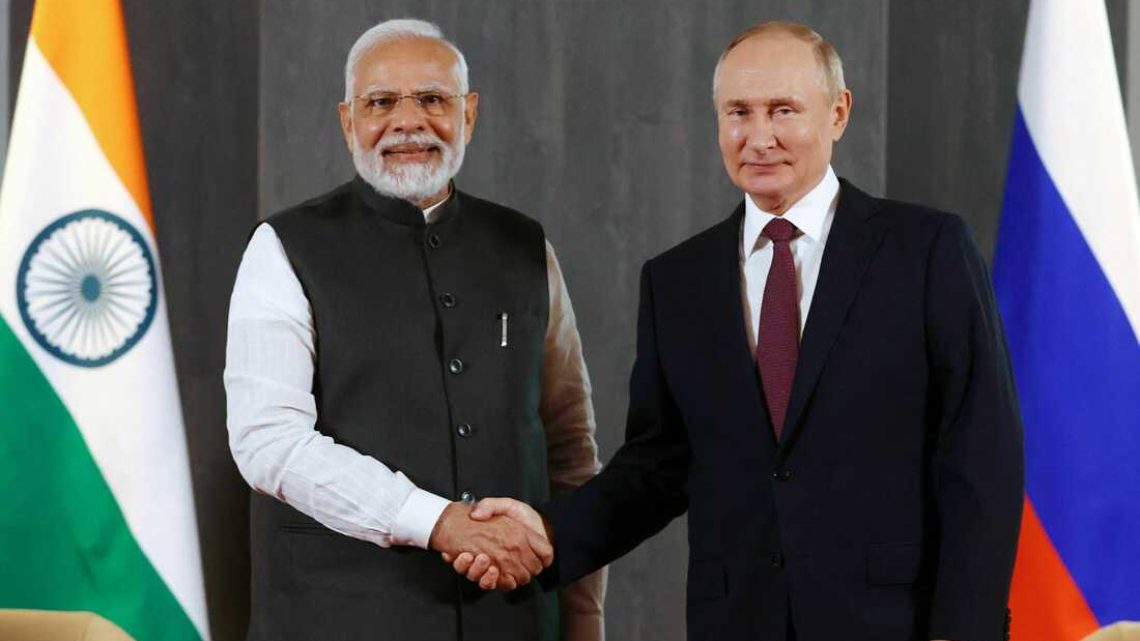
But the truth cannot be hidden. The people of IIOJK continue to face injustice, restrictions, and lack of basic freedoms. No foreign meeting or press release can change the facts on the ground. The international community must continue to raise its voice for the rights of the people in IIOJK. No handshake in Moscow can cover up the silence forced on millions in the occupied region.
The Global View: India’s Trust Deficit
India’s actions are being closely watched around the world. Once seen as a responsible power, India is now being questioned for its unclear policies and sudden changes in alliances. Friends and partners are beginning to ask if India can still be trusted. This trust deficit will hurt India more than any economic loss.
Diplomatic relations are built on consistency, responsibility, and respect. If a country moves from one camp to another whenever it feels pressure, it weakens its own standing. India is now facing the result of this lack of consistency. Its reputation is falling, and its claims of being a regional or global leader are losing value. India’s confused shift to Moscow has only confirmed one thing: its strategic weakness is no longer a secret.
Pakistan’s Clear Role in a Changing World
In this changing world, Pakistan must continue to act with care and seriousness. The global order is no longer controlled by a few powerful countries. It is now based on cooperation, mutual benefit, and shared respect. Pakistan can play an important role in this new order if it remains focused on clear goals and does not repeat the mistakes made by others.
Pakistan must continue to strengthen its ties with China, Central Asian countries, the Gulf, and partners in Europe and North America. This should be done with long-term planning, not with sudden reactions. Economic development, peace, and dialogue should remain the main goals of our foreign policy.
Use of Economic Diplomacy for National Strength
Today, global influence is not only measured by military strength. It is also built on trade, investment, and smart use of economic diplomacy. Pakistan has made important progress in these areas. Now is the time to build further.
While India’s uncertain moves create confusion, Pakistan must show the world a different example. A country that chooses steady progress over media headlines. A country that invests in partnerships, not pressure. A country that believes in peace through strength, not conflict for attention.
The Region Needs Stability, Not Ambition
India’s behaviour has already caused instability in the region. From military build-ups to political interference, Delhi has often chosen confrontation over cooperation. Now, as its foreign policy begins to collapse, it is the region that suffers. Pakistan must act as a voice for stability and peace.
By supporting peaceful dialogue, fair treatment, and equal rights—especially in IIOJK—Pakistan can show the world that real leadership comes through justice and responsibility.
Conclusion: A Moment That Must Not Be Missed
India’s visit to Moscow may appear to be a diplomatic step, but in truth it reveals deep confusion and lack of direction. It shows a country reacting to pressure rather than leading with purpose. For Pakistan, this is not just a moment to observe. It is a moment to act.
Pakistan must continue to move with focus and wisdom. The world needs countries that stand for peace, equality, and long-term progress. This is Pakistan’s moment to rise, not just as a regional player but as a responsible member of the international community.