From Genocide to Demographic Invasion: How India’s Occupation of IIOJK Threatens South Asian Peace
August 3, 2025Rana Qasim Noon, Chairman of Pakistan’s Kashmir Committee, reaffirmed during a seminar marking Youm-e-Istehsal-e-Kashmir on August 5 that Indian Illegally Occupied Jammu and Kashmir (IIOJK) remains the most critical unresolved agenda of the partition era. He stressed that Pakistan has already fought wars for Kashmir and stands prepared to do so again if necessary. Until the Kashmir issue is resolved justly, the region will remain unstable and peace will remain an illusion.
Kashmir: Pakistan’s Lifeblood and Global Moral Cause
Noon asserted that Kashmir transcends political divides in Pakistan; it is a national cause that unites the entire nation. He emphasised that IIOJK is and has always been an integral part of Pakistan in every respect. Pakistan has supported Kashmir politically, diplomatically, morally, and militarily.
India’s unilateral actions, especially attempts to alter population ratios in IIOJK, are a direct violation of international law and United Nations resolutions.
Demographic Invasion and Full-Scale Militarisation
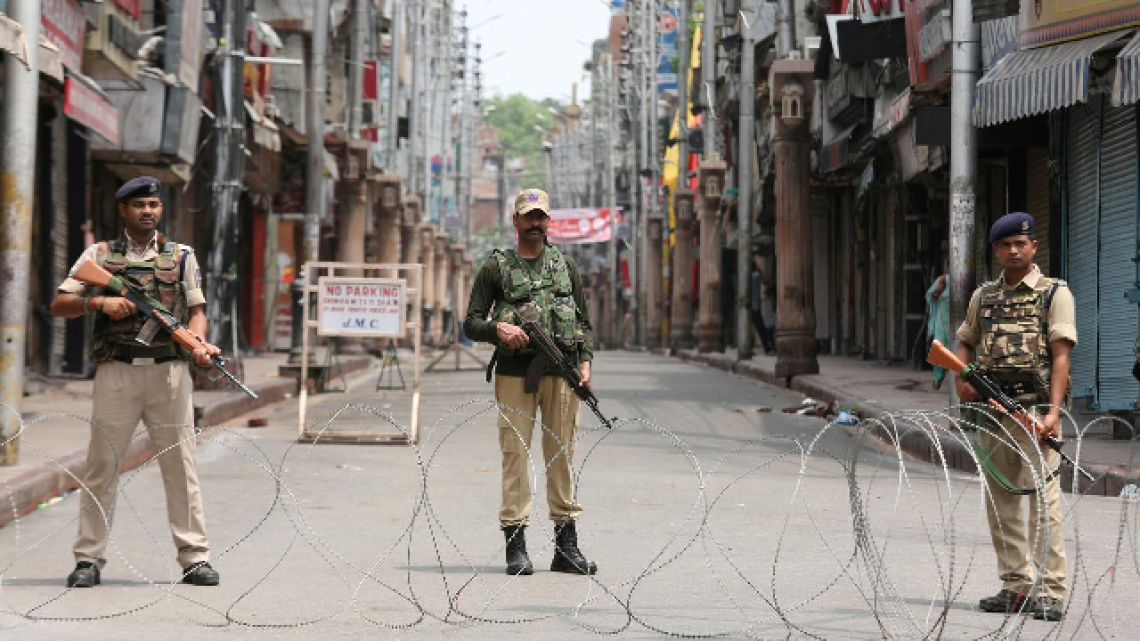
India has stationed one million troops in IIOJK; no region in the world faces such overwhelming military deployment. Rana Noon compared the region to Gaza: while sixty thousand people have been martyred in Gaza, over one hundred thousand have lost their lives in IIOJK.
India’s bid to change the Muslim-majority demographic and suppress resistance represents gross injustice that must be condemned globally.
False Flag Operations for Political Exploitation
Noon sharply criticised India’s use of false flag operations such as Pulwama and Pahalgam for domestic political gain. Narendra Modi, he noted, had made the removal of Article 370 and the demolition of Babri Masjid part of his election manifesto.
These actions were not independent decisions but part of a wider strategy to inflame communal divisions and distract from democratic accountability.
Kashmiris Have Raised Their Own Mandelas
The Chairman praised Kashmiri resistance leaders such as Shabbir Shah, Asiya Andrabi, Yasin Malik, and Dr Qasim Faktoo, describing them as symbols of steadfast courage. Quoting Syed Ali Geelani’s assertion that Kashmiris are Pakistanis and Pakistan is theirs, he underlined that no regime can wipe out their identity or break their resolve.
Pakistan’s Offer for Investigation Ignored by India
After the Pahalgam incident, Pakistan openly offered cooperation for any fact-finding probe, but India refused to engage. Noon praised Field Marshal Asim Munir for responding to Indian provocations with strategic clarity, saying that India’s arrogance was humbled.
Just as India underestimated China in 1962, it misjudged Pakistan on 10 May 2025 and was forced to retreat. That day, Noon said, also marked the collapse of Modi’s carefully manufactured political narrative.
Proxy Warfare and Hollow Ceasefire Claims
Having failed in direct military confrontations, India has turned to proxy warfare, including targeting the Neelum-Jhelum project. Despite ceasefire arrangements, Indian forces repeatedly violate peace on the Line of Control.
Noon reiterated that ceasefires can only be meaningful if the root cause, the Kashmir dispute, is addressed. He emphasised that Pakistan will never accept Indian hegemony.
Unified Parliament, Unified Position
Noon highlighted that a cross-party parliamentary delegation visited the United Kingdom, showcasing Pakistan’s united stance on Kashmir. He reiterated that the issue is beyond political lines; it is a matter of national dignity.
The path to peace lies in respecting water treaties, ending cross-border interference, and initiating honest dialogue.
Truth from the Defence Committee
Chairman of the Defence Committee, Fateh Ullah, stated that in 1947, India suffered defeat in IIOJK and approached the United Nations for cover. He stressed that Kashmir was always intended to be a part of Pakistan. Its future must now be decided in accordance with historical truth and global justice.
Abhinandan’s Release: A Message of Peace, Not Weakness
The return of Indian pilot Abhinandan was not an act of submission, but a powerful statement of Pakistan’s commitment to peace. Noon clarified that Pakistan desires harmony but will never tolerate aggression.
India’s misreading of Pakistan’s intentions only resulted in strategic embarrassment for New Delhi.
Pakistan Follows Law, India Flouts It
Fateh Ullah further pointed out that while Pakistan adheres to international law, India continues to act outside its boundaries. He asserted that if Pakistan wanted, it could reclaim IIOJK swiftly, but it chooses diplomatic and legal means because principles matter.
India’s Water Warfare Strategy Exposed
Former AJK minister Farzana Yaqoob warned that India’s construction of dams before suspending the Indus Waters Treaty is a threat to Pakistan’s water security. Defending water, she said, is as essential as defending territory.
She also warned that India had targeted the Neelum-Jhelum project and may do so again.
India’s Genocidal Campaign in IIOJK
Abdul Hameed Lone of the All Parties Hurriyat Conference reminded that since August 2019, India has resorted to a policy of systematic genocide in IIOJK. He urged international institutions to hold India accountable for violating UN resolutions.
He underlined that Pakistan’s sacrifices in three wars for Kashmir are unmatched.
IIOJK: The World’s Largest Open-Air Prison
Sheikh Abdul Mateen described the occupied valley as a giant prison, where Indian soldiers are posted outside every home. Basic freedoms—movement, speech, and even mourning—are denied.
He said the two-nation theory finds its strongest validation in IIOJK’s suffering. Despite such conditions, the will for freedom continues to rise.
Conclusion: Peace Demands Justice in IIOJK
All speakers made it clear that peace in South Asia is impossible without resolving the Kashmir dispute. India must withdraw its troops, allow freedom of expression, release political detainees, and participate in genuine talks.
Pakistan remains committed to peace, but not at the cost of justice. IIOJK is not a marginal issue; it is the defining issue of our region. As long as Indian forces continue their occupation, peace will remain an illusion and regional instability will persist.