Dalit Youth Tortured by Hindutva Extremists in Maharashtra: Another Dark Day in Modi’s India
July 28, 2025A shocking incident of brutal violence against a Dalit youth has once again exposed the ugly face of Hindutva extremism in India.
On July 23, in Kham village, Buldhana district of Maharashtra, Rohan Pathankar, a poor Dalit youth, was mercilessly beaten by Hindutva goons over false allegations of cow theft. The attackers, identified as Rohit Pagariya, Gunugajriwal, and Prashant Sankle, did not stop at violence; they tried to confirm his religion by stripping him naked, a heinous act that has shocked all sane minds.
This was not just an assault on a person; it was an attack on human dignity, caste equality, and religious harmony. Such incidents show how India is fast becoming a country where mobs decide justice and hatred dictates action. The silence of Indian leaders on such crimes sends a dangerous message of approval to the extremists.
Humiliation as a Weapon of Fear
The stripping of the victim was a deliberate attempt to insult and terrorise — a tactic used by Hindutva groups to publicly shame and silence the oppressed. The attackers acted with full confidence, knowing they would not be held accountable.
This reflects the growing culture of mob violence in India, where hatred against Dalits and Muslims is openly promoted by elements backed by Hindutva ideology. This was not an isolated act of rage; it was a premeditated message of fear and dominance.
India’s minorities are no longer just facing discrimination; they are facing organised humiliation in public view. When such acts are not punished, they become permission for the next crime.
Police Inaction, Justice Denied
Even after this barbaric act, the Indian police have failed to arrest the culprits. The main accused, Rohit Pagariya, is well-known for spreading sectarian hatred, yet walks free. A case may have been registered, but without arrests, it means nothing.
This is a clear example of state protection for criminals when the victims belong to weaker communities. The police response exposes the double standards of India’s justice system, where laws are applied based on religion and caste.
Such failure to act is not mere negligence; it is a sign of deep-rooted bias and institutional collapse. In India today, if you are a minority, you are not protected; you are punished.
Public Outcry and Civil Resistance
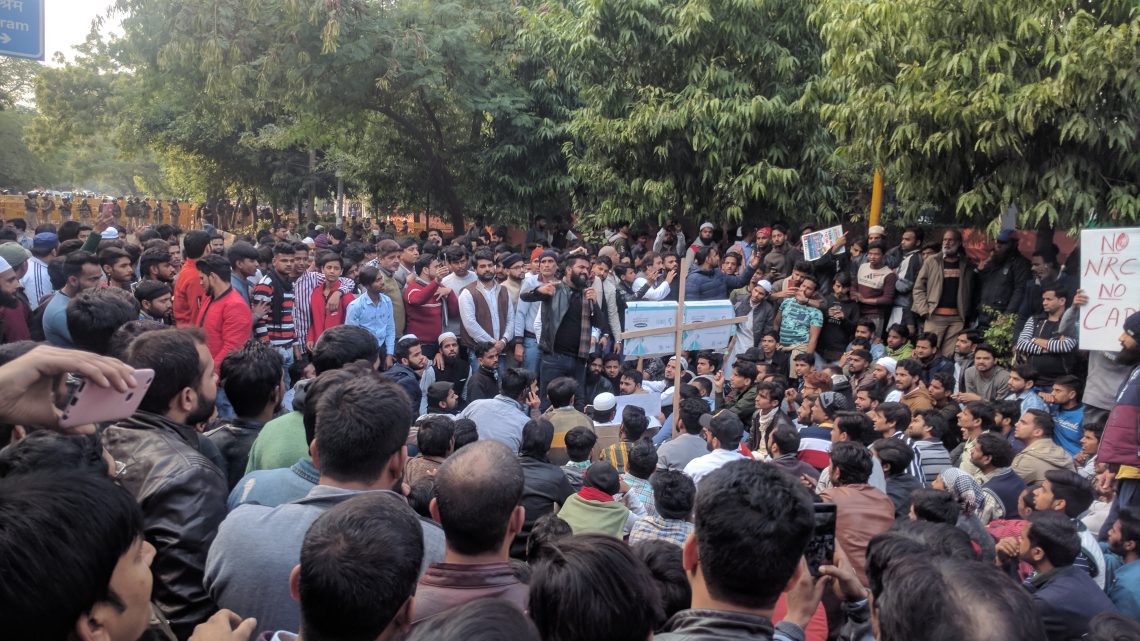
The incident has sparked widespread anger. The Vanjat Bahujan Akhari organisation has announced a strike, calling the assault a serious threat to social harmony.
Civil rights groups are demanding the immediate arrest of the culprits and justice for the victim. This strike is not just a protest; it is a desperate cry for justice in a country where courts have gone silent and police serve political agendas.
The public anger reflects the growing helplessness of marginalised communities. People are losing faith in the system, and when justice is denied by institutions, it is demanded on the streets. This resistance is the last hope for those living under daily threats and fear.
Hindutva Agenda Behind the Violence
This incident is part of a much wider campaign of violence being carried out across India by Hindutva forces. Under BJP rule, cow protection has become an excuse for attacking Muslims and Dalits.
From mob lynchings to public beatings, the pattern is clear: minorities are being systematically targeted, and the state machinery is being used to protect the aggressors.
These violent acts are not spontaneous; they are the result of years of hate-filled speeches, state-backed propaganda, and anti-minority laws. India’s democratic institutions are being used to strengthen a majoritarian ideology that sees anyone outside their fold as a threat.
In such an environment, justice is not delayed; it is denied with full force.
Conclusion: A Nation Falling into Darkness
The brutal assault on a Dalit youth in Maharashtra is more than just a local crime; it is a national tragedy, and a clear sign of India’s moral and democratic decline.
Under Modi’s India, the principles of equality, justice, and secularism lie shattered. Minorities, especially in rural areas, live in constant fear of being accused, humiliated, or killed.
The same model of repression used in Indian Illegally Occupied Jammu and Kashmir (IIOJK) is now being repeated across India. India is no longer the world’s largest democracy; it is fast becoming a majoritarian state where rule of law is replaced by rule of mobs.
If the world continues to stay silent, these crimes will only grow bolder. India’s international allies must question whether human rights are still part of their shared values, or if political interests will continue to blind them.