Bulldozing Resistance: The Modi Regime’s Campaign of Property Confiscation and Forced Displacement in IIOJK
July 26, 2025In Indian Illegally Occupied Jammu and Kashmir (IIOJK), a dangerous new front has intensified in India’s occupation strategy for property seizures.
Behind the veil of legal procedures and national security rhetoric, the Modi-led regime has unleashed a targeted campaign to dispossess native Kashmiris of their ancestral homes and lands. This is not law enforcement; it is a blatant strategy of marginalization and demographic subversion. Kashmiris are being rendered homeless in their own land under pretexts that lack credibility and legal merit.
Five More Families Dispossessed in 48 Hours
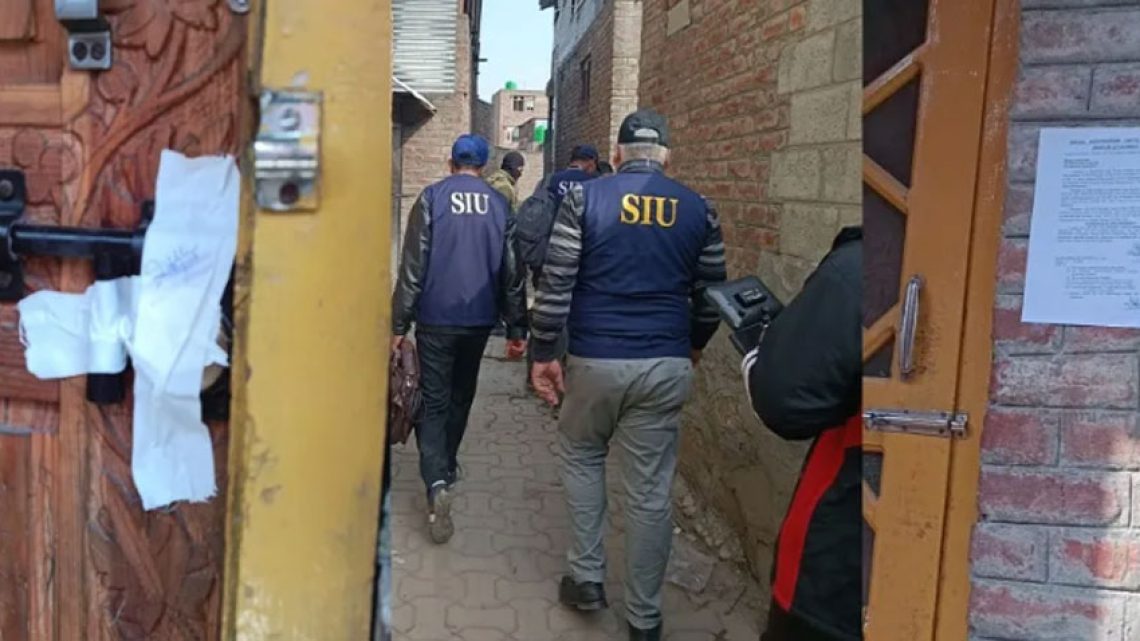
In just two days, five residential properties were confiscated in Baramulla and Kupwara districts under the draconian Unlawful Activities (Prevention) Act (UAPA). This incident is not isolated. Since the illegal revocation of Article 370 in August 2019, hundreds of homes have been seized, leaving families uprooted and traumatized. The pattern is clear; this is a systematic policy of intimidation, not the application of justice.
Crushing Dissent Through Administrative Coercion
The use of UAPA to justify property seizures reflects the extent to which Indian authorities are prepared to suppress political dissent in IIOJK. Individuals are punished not through fair trial, but through bureaucratic retribution. The act of owning property, having relatives abroad, or merely expressing political opinion is now treated as criminal conduct. The state is using administrative tools to enforce political submission.
A Clear Violation of Due Process and Human Rights
These actions represent a direct assault on the principle of due process. Properties are being sealed without transparent investigations or independent judicial oversight. Victims are left without recourse. These are not isolated excesses; they are structural violations that expose the breakdown of legal safeguards in the occupied territory. The judiciary’s silence on such unlawful practices only compounds the crisis.
Weaponizing Law to Achieve Political Goals
In IIOJK, the law has been weaponized to advance a purely political agenda. The seizure of homes, land, and businesses is part of a broader plan to destabilize the social fabric of the valley. India is not just targeting specific people; it is punishing entire communities, families, and neighborhoods to break the collective will of the people. This is collective punishment, which violates all international norms of justice and governance.
Demographic Engineering Through Displacement
The underlying objective of these property seizures is demographic restructuring. By displacing Kashmiri Muslims and paving the way for non-local settlers, the Indian government seeks to alter the region’s demographic composition. This policy aims to erode the Muslim majority character of IIOJK and transform the local population into a marginalized minority in their own homeland. Such actions qualify as demographic aggression and violate international conventions on occupation and civil rights.
Destroying Homes to Erase Identity
In IIOJK, homes are not just physical structures; they are the last remaining symbols of Kashmiri identity, dignity, and continuity. By targeting these homes, the Indian state seeks to erase cultural memory, silence resistance, and erase political identity. The destruction of homes during military operations and now through legal notices signals the expansion of the occupation from public space into private life.
No Redress, No Remedy, No Accountability
One of the most disturbing features of this campaign is the total absence of accountability. Victims of these seizures have no forum for appeal, no institutional protection, and no access to fair legal remedy. This complete lack of legal recourse reveals the extent of institutional collapse in the region under Indian control. The local administration operates under direct political instructions from New Delhi, leaving no space for independent or impartial decision-making.
International Silence: A Grave Moral Failure
The global community’s failure to take notice of these illegal seizures is deeply troubling. The forced dispossession of civilians, destruction of private property, and denial of basic rights should trigger international condemnation. Yet the silence of global powers and human rights bodies reflects a shameful abdication of moral responsibility. The crisis in IIOJK cannot be resolved through diplomacy alone; it demands principled international intervention based on justice and legality.
Kashmiris Stand Resilient Amid Adversity
Despite the relentless assault, the people of IIOJK remain defiant. Their resilience in the face of occupation, repression, and injustice continues to inspire resistance across generations. The Modi regime’s policies may uproot families and confiscate land, but they cannot erase the political consciousness of an entire people. The struggle for dignity, justice, and self-determination persists and will continue to do so despite the cost.
Conclusion: Occupation by Lawfare
India’s strategy in IIOJK has now evolved into a policy of lawfare, using legal instruments to carry out political repression. Property seizures, once a rare exception, have become an institutionalised practice of silencing dissent, displacing citizens, and reconfiguring the region’s demographic and political character. This is not governance; it is occupation with illegally legal cover. If unchecked, it will lead to irreversible damage. The world must hold India accountable for its crimes.