Weaponizing Demolition: India’s Collective Punishment Tactics in IIOJK
July 5, 2025India is using home demolitions in IIOJK as a form of collective punishment, targeting families and communities to suppress dissent and resistance.
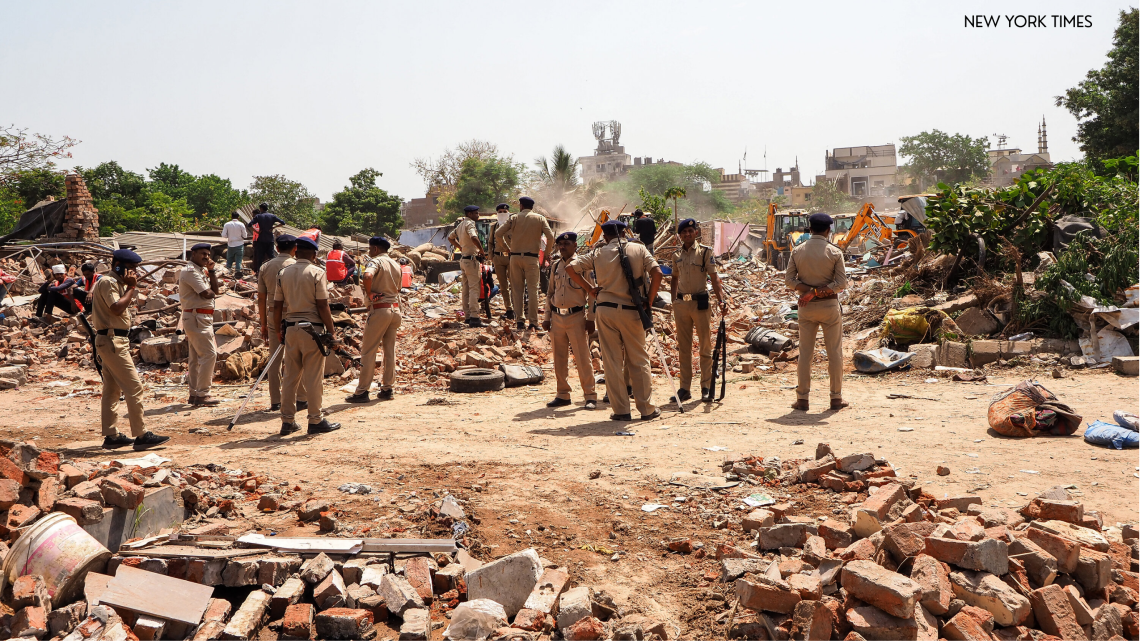
In Indian Illegally Occupied Jammu and Kashmir (IIOJK), demolition drives have emerged as a deliberate strategy of collective punishment. What began as a so-called “anti-encroachment” campaign has evolved into a tool of intimidation, retribution, and suppression, targeting not just individuals, but entire families and communities.
Indian authorities claim these demolitions target illegal structures. In reality, they disproportionately affect Muslim Kashmiris, especially families of political activists, freedom fighters, and dissenters. Homes are often razed without proper legal notice or due process—turning what should be civil administrative procedures into acts of collective reprisal.
These demolitions echo the Israeli model in Palestine, where homes of alleged militants are destroyed as a form of deterrence. In IIOJK, the intent is the same: punish many for the actions of one, and send a chilling message to the rest.
Entire households—often including elderly, women, and children—are made homeless overnight. Properties passed down for generations are flattened within hours. These acts have a psychological toll, eroding the social and economic backbone of families and deepening feelings of alienation and injustice.
Locals view the demolitions not as development or legal reform, but as deliberate acts of collective humiliation meant to crush the spirit of resistance. The absence of consistent legal recourse only worsens the trauma.
Legal experts argue that collective punishment violates international law, including the Fourth Geneva Convention, which prohibits penalizing individuals for crimes they did not commit. Human rights organizations have condemned these acts as punitive and extra-legal, demanding urgent international scrutiny and action.
The use of demolition drives as collective punishment in IIOJK reflects a deeper policy of coercion and erasure, targeting Kashmiri identity and resistance. The international community must hold India accountable and ensure that justice, not vengeance, shapes the future of Kashmir.