Petitioners Urge Indian Supreme Court to Hear Case on IIOJK’s Unconstitutional
July 2, 2025As legal and civil voices grow louder, a joint plea by former Indian officials demands the Supreme Court address what they call a grave constitutional betrayal—stripping Jammu and Kashmir of its statehood.
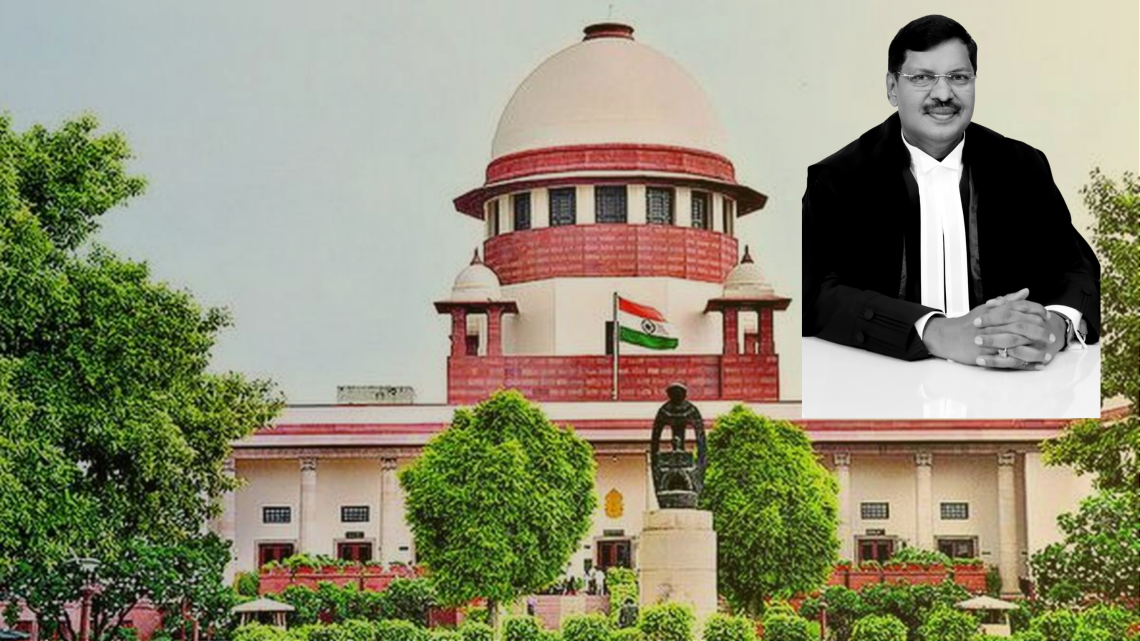
A group of prominent Indian petitioners—including former bureaucrats and military veterans—has called on the Chief Justice of India, B.R. Gavai, to form a dedicated Supreme Court bench to examine the constitutional validity of the Modi government’s 2019 move that stripped Indian illegally occupied Jammu and Kashmir (IIOJK) of its statehood.
The petitioners—Gopal Pillai (former Home Secretary), Major General (retired) Ashok K. Mehta, Air Vice-Marshal (retired) Kapil Kak, Radha Kumar (former Kashmir interlocutor), and Amitabha Pande (former Secretary of the Inter-State Council)—have submitted an open letter emphasizing the urgency of judicial intervention.
A special report umveils that, the letter expresses deep concern over the fact that nearly six years after the revocation of Article 370 and the bifurcation of Jammu and Kashmir into two Union Territories, the region has yet to see the promised restoration of its statehood.
The group referenced a key statement made by the Supreme Court during its previous deliberations on the matter. The court had noted it would not rule on the constitutionality of the state’s demotion because the Solicitor-General had assured that statehood would be restored “at an appropriate time.”
However, the petitioners now argue that continued delays and recent government remarks undermine both that assurance and constitutional protections. They cited the Solicitor-General’s December 2023 statement that statehood would be restored “in stages” as legally problematic and in contradiction with constitutional principles.
“Such a policy effectively sets a precedent that allows any Indian state to be unilaterally downgraded to a Union Territory,” the petitioners warned. “This is not just about Jammu and Kashmir—it puts the entire federal structure of India at risk.”
The letter also highlighted the changing political landscape in IIOJK. It pointed to the peaceful October 2024 Assembly elections, which saw high voter turnout and an absolute majority for the National Conference—a regional party. The petitioners argue this outcome demonstrates the people’s desire for a functional, locally elected government with real powers.
“In the wake of the recent Pahalgam attack and the persistent security challenges in the region, restoring civil and political rights is not only a legal necessity but also a strategic imperative,” the letter stated. The authors maintained that true stability in the region can only come through democratic governance, not centralized control.
The letter emphasized that the current situation deprives people of fundamental rights, reduces oversight over administrative decisions, and delays the re-establishment of local governance institutions that are critical for accountability.
Calling the continued denial of statehood unconstitutional and politically unsustainable, the petitioners urged the Chief Justice to take immediate action by constituting a bench to hear pending petitions related to the case. They also demanded that the court set a definitive deadline for the restoration of statehood and ensure safeguards so that no future government can similarly dissolve existing states.
Legal scholars and political analysts have called the petition a significant development in the ongoing discourse around Kashmir’s constitutional status. They believe it puts renewed pressure on India’s highest court to address a question that remains unresolved even after years of legal and political wrangling.
The letter reflects a growing sentiment, even within India’s own bureaucratic and strategic community, that the abrogation of Jammu and Kashmir’s autonomy was not only politically controversial but also legally indefensible.